The Architecture of Impunity

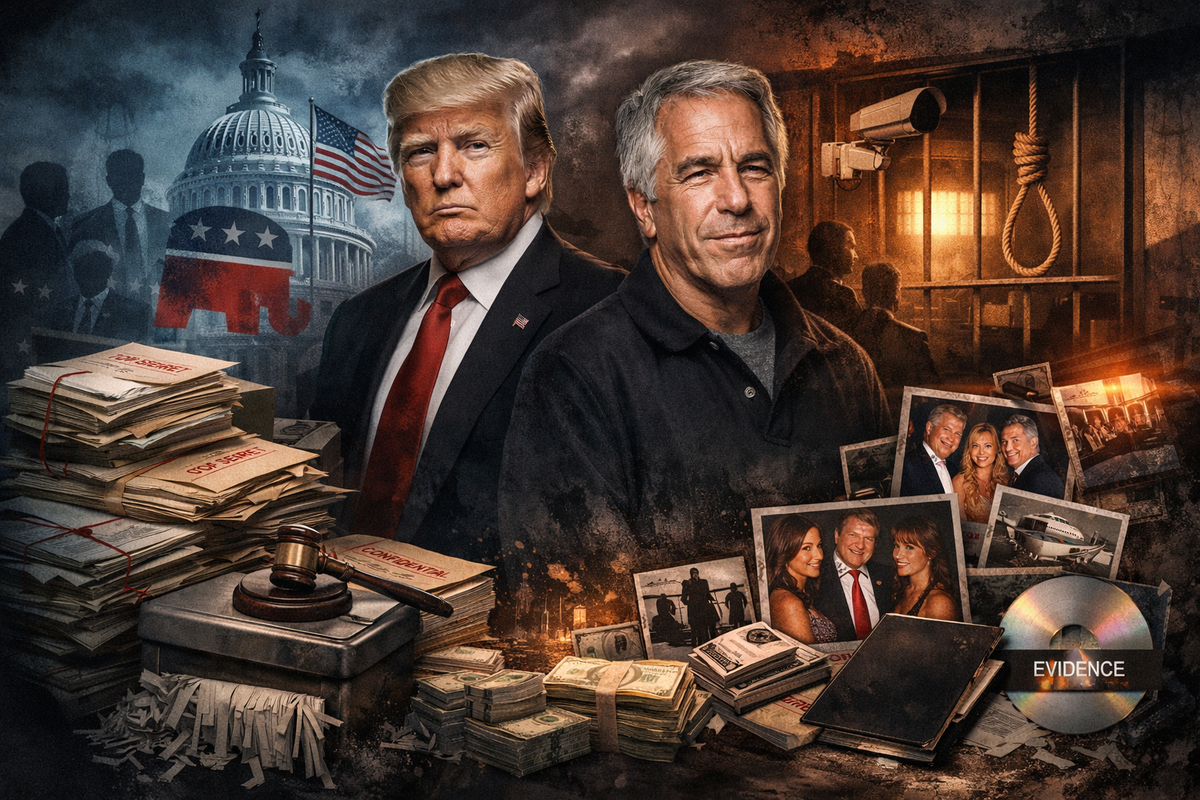
The Epstein files matter not because they promise a single revelation, but because they expose how power behaves when exposure becomes inconvenient. In that sense, the most consequential story is not buried in a footnote or a photograph. It is the pattern of resistance that formed around disclosure itself and the way Donald Trump and the modern Republican Party moved, in parallel and sometimes in concert, to narrow what the public would be allowed to see.
From the moment Epstein reentered the federal system in 2019, transparency became a contested terrain. Trump’s administration controlled the Justice Department when Epstein died in custody. The official findings may stand, but the surrounding failures ensured permanent doubt, and that doubt made records dangerous. Once Epstein was gone, documents became the only remaining witnesses. Control of documents is control of narrative.
Publicly, Trump oscillated between dismissal and deflection. At times he minimized his relationship with Epstein. At others, he reframed it as a falling-out that proved moral distance. What he did not do was support a clean, comprehensive release of records that would allow those claims to be tested. That posture hardened over time. As calls for disclosure grew louder, Trump and his allies increasingly framed the Epstein files not as a matter of public accountability but as partisan sabotage, a tactic designed to embarrass or weaken him. That reframing is critical. Once transparency is recast as harassment, delay becomes a virtue.
The Republican Party largely followed suit. GOP leadership resisted early congressional efforts to compel disclosure, arguing that release could endanger privacy, interfere with investigations, or unfairly smear public figures. Those concerns are not illegitimate in isolation. They become suspect when invoked selectively, especially in a case where victims were ignored for years while elites were protected. The same party that routinely demands radical transparency in other contexts suddenly discovered the sanctity of sealed files when Epstein’s records were at issue.
Procedurally, the resistance was quiet and technical. Requests for more time. Expanded redaction standards. Arguments about executive privilege and investigative sensitivity. None of these moves required a headline-grabbing order. They worked through attrition. Every month that passed without release diluted public attention and raised the cost of revisiting the issue. Delay was not an aberration. It was the strategy.
The turning point came only when Congress forced the issue. The Epstein Files Transparency Act did not emerge from executive initiative. It emerged from bipartisan frustration with DOJ inaction and executive foot-dragging. The law imposed a hard deadline and explicitly barred withholding records for reasons of reputation or political embarrassment. That provision alone tells you what Congress believed was happening. When lawmakers write prohibitions that specific, they are responding to observed behavior, not abstract fears.
Even then, resistance did not evaporate. Trump publicly criticized the push for release, suggested that the files were being weaponized, and signaled that further disclosures would be contested. Republican allies echoed the theme, warning of chaos, misinformation, and unfair guilt by association. Again, the point is not that every warning was baseless. It is that the cumulative effect was to chill transparency rather than facilitate it.
This resistance must be understood in light of Trump’s broader approach to oversight. Across multiple domains, he has treated subpoenas as optional, inspectors general as enemies, and courts as obstacles to be worked around rather than respected. The Epstein files fit seamlessly into that worldview. They represent not just a reputational risk but a challenge to the idea that executive power can decide when accountability is complete.
The “Katie Johnson” lawsuit underscores why this matters. A civil case alleging sexual assault by Epstein and Trump disappeared after reported threats, never reaching discovery or judgment. Whatever one believes about the allegations themselves, the structural lesson is unmistakable. When accusations target powerful figures, the system’s capacity to protect the vulnerable collapses quickly. In that context, the state’s obligation to preserve and release records becomes even more important. Documents are sometimes the only remaining form of testimony.
What the files show, even in partial release, is that Epstein’s protection was not the product of one corrupt deal or one compromised official. It was sustained by a culture that prioritized elite stability over institutional truth. Trump and the GOP did not invent that culture, but they have worked to preserve it when it threatened their interests. By resisting disclosure, reframing transparency as an attack, and leaning on procedural delay, they helped extend the very impunity the Epstein case symbolizes.
The civic danger is not confined to Epstein. When a political movement teaches its followers that accountability is persecution and that records are weapons, it erodes the foundation of democratic oversight. Transparency becomes conditional. Justice becomes negotiable. The Epstein files, forced into the open by statute rather than leadership, reveal not only who crossed paths with a predator but also who fought hardest to keep the public from seeing how the system failed around him. That, more than any single name in a ledger, is the overlap that should trouble anyone who still believes the law is meant to look upward as well as down.