A Well-Regulated Memory
The Second Amendment has always stood at the crossroads of America’s struggle to define what freedom really means. It is recited as scripture, invoked as identity, and used as a political fault line that splits families, communities, and entire regions. But the story behind it is stranger, more tangled, and more revealing than the familiar slogans suggest. Its history is not simply about liberty or oppression, but about how power was distributed, who counted as a citizen, and how fear shaped the laws of a young nation.
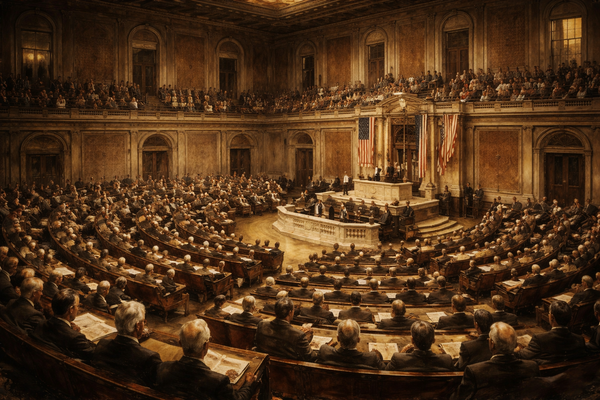
When the Revolution ended, the Founders were haunted by the shadow of the government they had just overthrown. The memory of a monarchy attempting to disarm its subjects was fresh, and paranoia of centralized authority ran deep. When James Madison drafted the Bill of Rights in 1789, it was not an ideological celebration of personal firepower—it was a reassurance to anxious states that a standing federal army would not become the new Redcoats. Ratified in 1791, the Second Amendment did not promise an unregulated individual right. It was framed around the needs of “a well-regulated militia,” which at the time meant a civic institution in working order—not free-floating vigilantes.
Most Americans also don’t realize the degree to which the right to bear arms was restricted along racial and social lines. The Militia Act of 1792 mandated that every white male citizen between 18 and 45 own a musket and ammunition. It did not extend that obligation—nor that right—to enslaved people, Indigenous peoples, or many free Black Americans. The Second Amendment, in practice, was never universal. Southern states enforced brutal disarmament laws that kept Black Americans unarmed while empowering slave patrols to operate as armed, state-authorized militias. In this way, the “well-regulated militia” became both a symbol of civic duty and an instrument of racial terror.
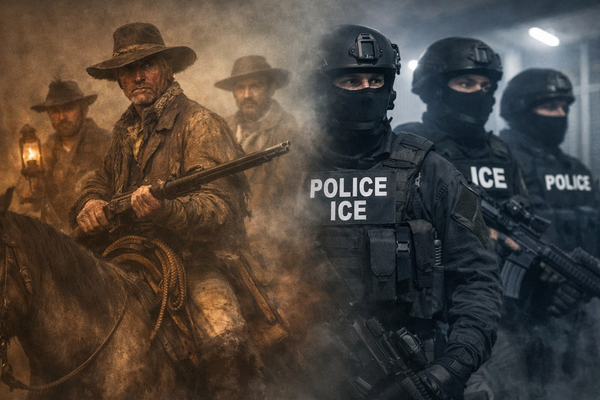
Gun regulation, too, is far older than the modern political debate makes it seem. The colonies restricted when and how guns could be fired to prevent chaos or accidental violence. Frontier towns like Tombstone required visitors to check their weapons at the edge of town. The mythology of the Wild West—every man armed, every street a standoff—is a fabrication layered over a history of communities choosing peace by law.
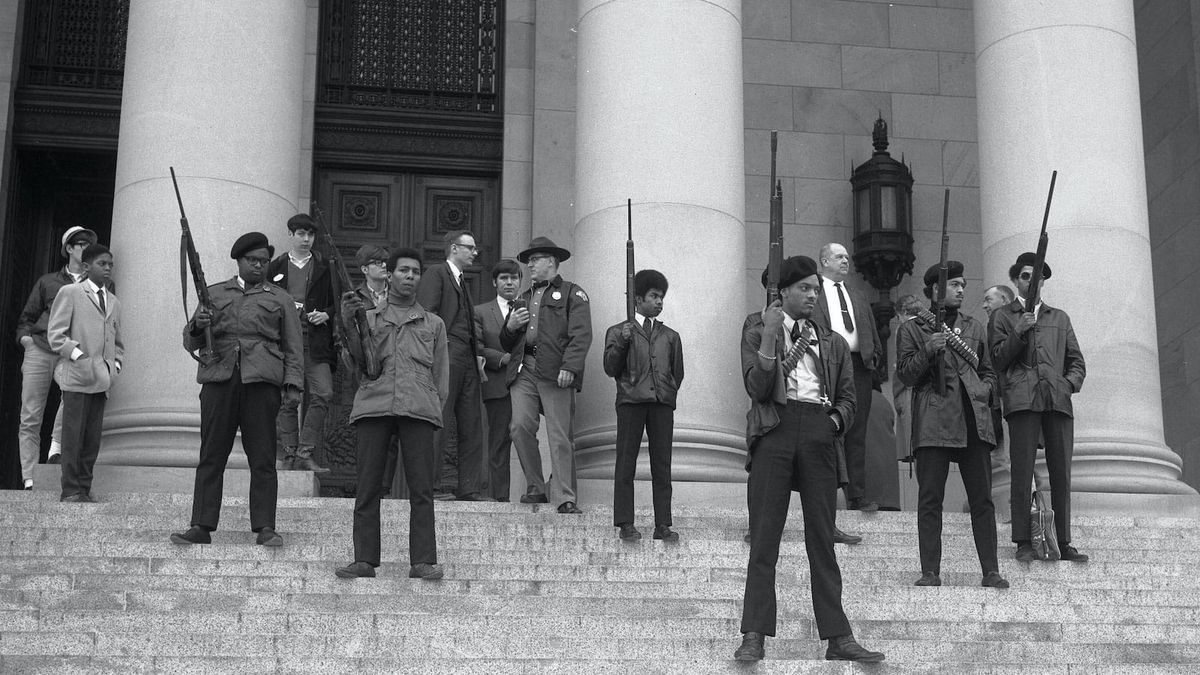
By the 20th century, gun policy began to reflect political power more than public safety. New York’s Sullivan Act gave police broad authority to arrest armed citizens—often those who threatened the political machine that created the law. When the gangster era led to the National Firearms Act of 1934, the NRA was not yet the lobby it would become, but its quiet intervention helped shape national gun policy for decades to come. Even the conservative icon Ronald Reagan once signed one of the strictest gun control bills in U.S. history—the Mulford Act of 1967—after the Black Panther Party began exercising open-carry rights to police the police. The NRA supported that crackdown.
The modern understanding of the Second Amendment did not fully solidify until 2008, when District of Columbia v. Heller established the individual right to own firearms for self-defense. Yet even that ruling acknowledged that the right was not absolute and could be subject to regulation. The nuance of that decision is often ignored by those who invoke it most loudly.
And perhaps the most surprising detail of all: the Founders were familiar with gun inspections, registration, and storage requirements. Boston once made it illegal to store a loaded firearm in the home due to fire hazards. Militias documented who owned weapons so the state could call upon them when needed. Gun ownership was not simply a personal choice—it was a monitored civic obligation tied to collective security.
Today, America has more guns than people. The debate is no longer about forming militias to defend the republic. Instead, it is about identity, fear, politics, and history—much of it forgotten or rewritten. The Second Amendment has been used as a shield against tyranny, but also as a weapon of exclusion. It has protected the oppressed and empowered the oppressor, depending on who held the authority to enforce it.
To understand it honestly is not to weaken it. It is to confront what the Founders understood: that freedom is not the absence of structure, and that rights do not exist outside of responsibility. The true threat the Founders feared was not laws regulating weapons—but a government, or a people, unwilling to hold power accountable.