America’s Scientific Brain Drain: When the Lights Go Out in the Lab

For more than a century, the United States has been the world’s scientific superpower—a magnet for the best minds, the birthplace of Nobel laureates, and the center of innovation from Silicon Valley to the National Institutes of Health. Yet, according to a 2025 Nature poll, three out of every four researchers in the U.S. are now considering leaving the country. This number is staggering and unprecedented. It suggests not just individual discontent, but a systemic unraveling of the intellectual infrastructure that has long powered American progress. What was once the land of opportunity for scientists may now be pushing them away.
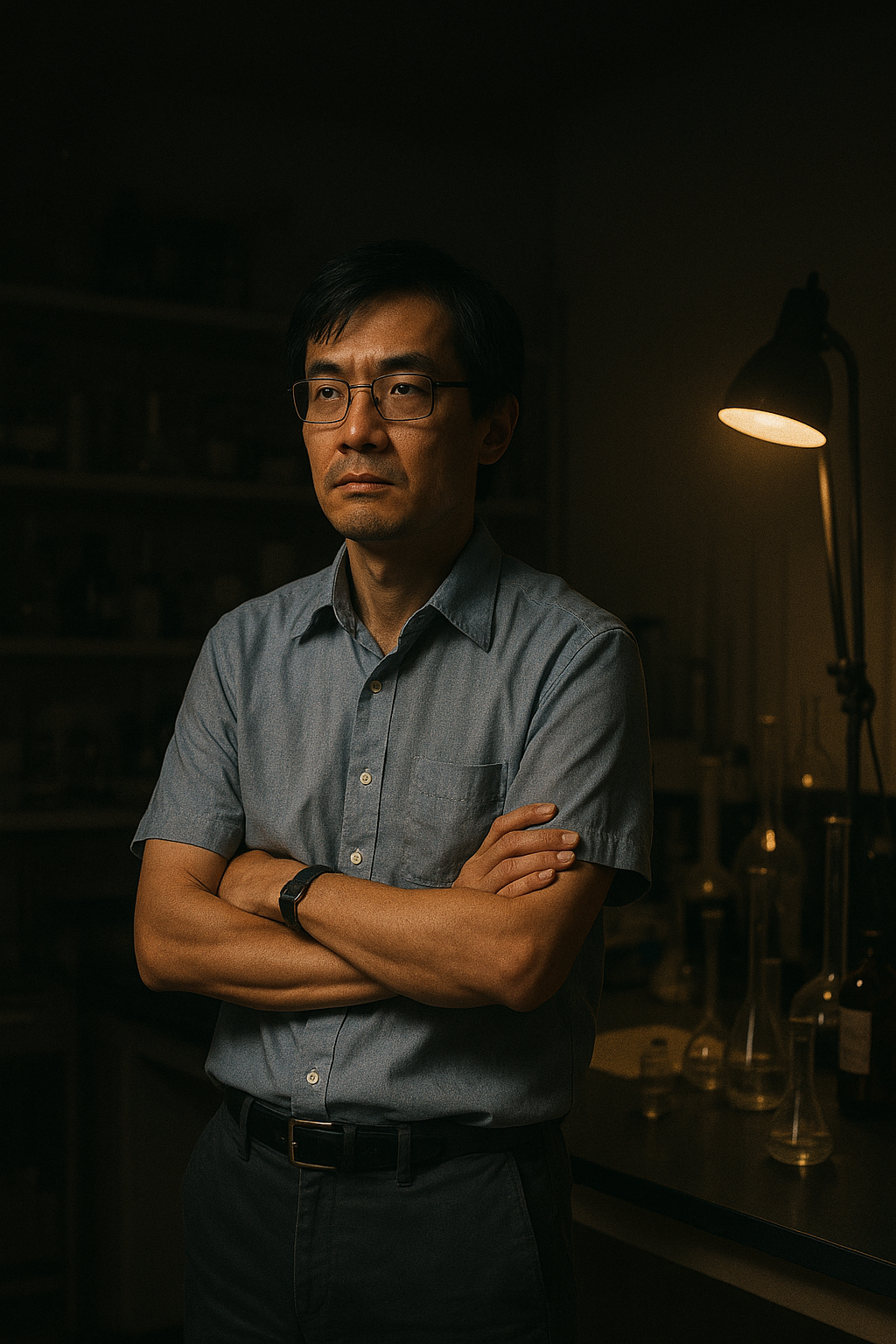
Among those contemplating this exodus is Terence Tao, the UCLA professor often called “the Mozart of Mathematics.” Tao’s career represents the pinnacle of what the U.S. once offered to the global scientific community: world-class funding, academic freedom, collaboration, and an open environment where ideas could thrive. As a child prodigy who came from Australia to pursue graduate work at Princeton and later won the Fields Medal, Tao found in America a place that nurtured genius. But even he now worries the system that raised him is collapsing. His institute has seen major funding cuts due to political battles in Washington. Federal agencies like the National Science Foundation, long the lifeblood of academic research, have been forced to suspend billions in grants as part of a broader push by the Trump administration to slash spending and reshape priorities. Tao, who once viewed the U.S. as a sanctuary for scientific inquiry, admits he’s now fielding offers from Europe, Australia, and China.
Tao’s story is not unique. Younger researchers across disciplines are feeling the same pressure. Biomedical engineer Daniella Fodera, for example, saw her NIH-funded research on uterine fibroids abruptly canceled before being temporarily restored. Neuroscientist Anna Darling entered her Ph.D. program at Ohio State full of hope, only to learn her funding was no longer guaranteed. Each of these stories captures a growing sense of instability, where years of dedication can be erased overnight by political whim. The once vibrant pipeline that fed generations of scientists—graduate students, postdocs, and junior faculty—is now riddled with uncertainty.
The causes of this brain drain are complex but interconnected. At the heart of it lies political interference, financial instability, and cultural hostility toward science itself. Since 2020, the U.S. has seen an escalation in anti-intellectual rhetoric and a growing skepticism toward expertise. From climate denialism to attacks on diversity and inclusion initiatives in universities, the environment for researchers has become toxic. Federal agencies have been directed to scrutinize grants for ideological content, and some universities have been punished financially for perceived “wokeness.” As Tao noted, the administration’s mindset “is not coming from the public interest being the primary objective.” When political loyalty begins to outweigh scientific merit, even the most brilliant minds will seek stability elsewhere.
The economic and societal stakes of this exodus cannot be overstated. Science is not just an academic exercise; it drives innovation, medicine, national defense, and the economy itself. When MRI scans are faster, when vaccines are discovered, when renewable energy becomes more efficient—those advances are the fruits of research funding and free inquiry. Tao’s own mathematical algorithms helped reduce MRI scan times by over two-thirds, directly benefiting millions of patients. To lose such talent is to lose the future itself. As biochemist Stephen Jones, who left for Lithuania, put it: “One of the things that’s always made America great is our research excellence. And that takes a long time to build—but when you lose it, it’s really hard to regain.”
Meanwhile, other nations are seizing the moment. The European Union and France have pledged more than half a billion euros to attract displaced U.S. researchers. Canada, Australia, and China have launched similar initiatives, offering stability, funding, and respect. The result is a global recruitment drive—America’s loss becoming everyone else’s gain. The Nature poll confirms this trend: the number of U.S.-based scientists applying for jobs abroad has risen by 30 percent in just one year. In some labs, entire teams are now discussing relocation together.
Yet, the solution is not mysterious. Restoring stability and faith in science requires political will. That means recommitting to the National Science Foundation and NIH with long-term funding guarantees insulated from partisan agendas. It means protecting academic freedom and ensuring researchers are not punished for studying politically inconvenient topics. It means keeping immigration pathways open so that the world’s best minds can still come here, as Tao once did, and call America home. Above all, it means reasserting that science is a public good—one that serves every citizen, regardless of ideology.
If current trends continue, the United States risks entering a new kind of Great Depression—an intellectual one. Universities will shrink, discoveries will stall, and industries built on innovation will falter. The country that once sent humans to the moon and decoded the human genome could soon find itself importing ideas it used to invent. The brain drain is no longer theoretical; it has begun. And unless America renews its commitment to curiosity, openness, and truth, the next Terence Tao won’t be working in Los Angeles or Princeton. He’ll be in Paris, Shanghai, or Melbourne—still solving problems, just not for us.