From the Dixiecrats to MAGA: How the South switched parties but kept the same politics

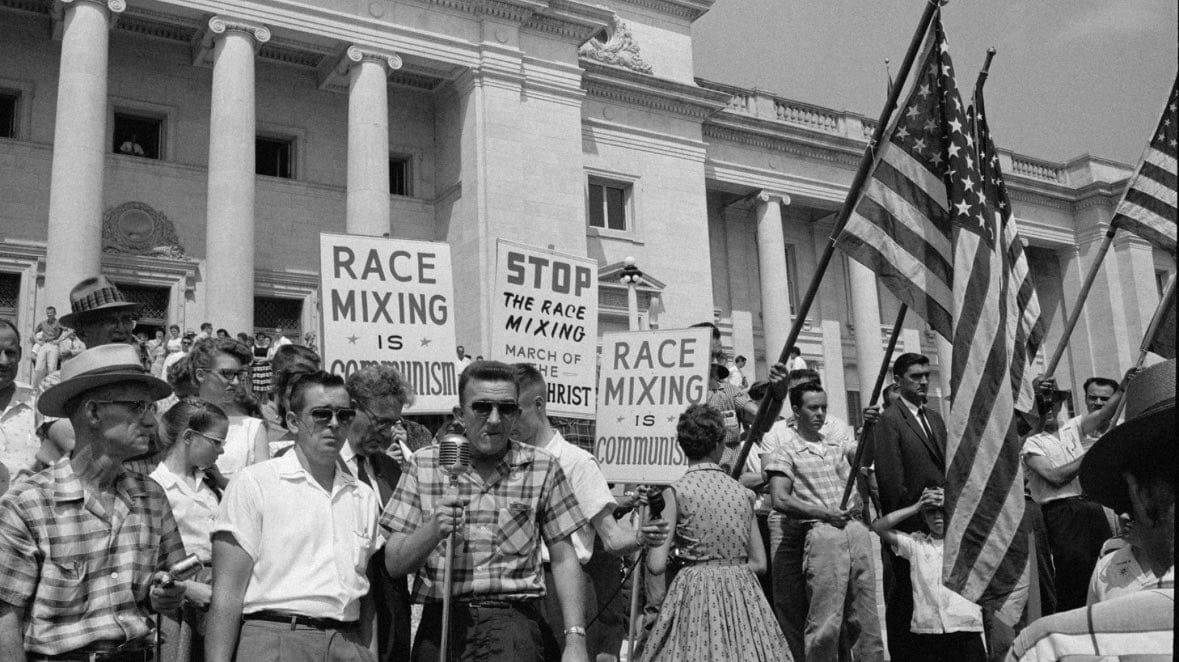
After the Civil War, the South earned the nickname “the Solid South” — a term that reflected not ideological unity, but racial and political entrenchment. Nearly every white Southerner voted Democrat, not out of progressive leanings, but because the Democratic Party was the vessel for preserving white supremacy and resisting federal interference. For nearly a century, Southern Democrats were conservative, segregationist, and staunchly devoted to states’ rights. They despised the Republican Party, which they associated with Abraham Lincoln, emancipation, and Reconstruction — the era they believed had humiliated the South and disrupted its racial hierarchy.
This political alignment began to fracture in the mid-20th century, when the Democratic Party’s national leadership began to embrace civil rights. The first tremor came in 1948, when President Harry Truman ordered the desegregation of the U.S. military and pushed for broader civil rights legislation. In protest, a bloc of Southern Democrats stormed out of the party convention and formed their own splinter group — the States’ Rights Democratic Party, better known as the “Dixiecrats.” Led by South Carolina Governor Strom Thurmond, the Dixiecrats ran on a platform explicitly defending segregation and “the Southern way of life.” Though they failed to win nationally, their defection signaled the beginning of the end for the Democratic stranglehold on the South.
The true rupture, however, came during the 1960s under President Lyndon B. Johnson. Following the moral momentum of the Civil Rights Movement, Johnson championed and signed the Civil Rights Act of 1964 and the Voting Rights Act of 1965 — landmark laws that outlawed segregation and enforced the right to vote regardless of race. Johnson understood the political consequences of his actions. As he reportedly told an aide after signing the Civil Rights Act, “We have lost the South for a generation.” He was correct. White Southerners, feeling alienated by the national Democratic Party’s support for racial equality, began to drift toward the GOP.
Richard Nixon capitalized on this resentment. His 1968 presidential campaign employed what became known as the “Southern Strategy.” While avoiding the overt racial language of the Dixiecrats, Nixon appealed to white voters’ sense of grievance with coded phrases like “law and order” and “states’ rights.” These were dog whistles for opposition to the civil rights movement and the social upheavals of the era. By positioning the Republican Party as the defender of traditional values and opponents of federal overreach, Nixon successfully pried open the South. His strategy transformed the GOP into the party of white conservatism and set the stage for decades of political realignment.
By the 1980s, Ronald Reagan solidified this shift. His optimistic conservatism — the “Morning in America” message — masked an ideological hardening around race, religion, and culture. The rise of the Religious Right, led by figures like Jerry Falwell and organizations such as the Moral Majority, made issues like abortion, prayer in schools, and “family values” central to the Republican platform. Evangelical Christians, particularly in the South, became a powerful voting bloc. The Democratic Party, meanwhile, increasingly drew support from African Americans, urban voters, and those advocating for progressive social reform. The cultural divide — between a conservative, predominantly white, rural South and a more diverse, urban, liberal North and West — became the defining political cleavage of the nation.
By the turn of the 21st century, the transformation was complete. The “Solid South” was now solidly Republican. From state legislatures to the U.S. Senate, the GOP dominated across the region. Democrats still retained overwhelming support from Black voters — a legacy of the Civil Rights era — but white Southerners had largely abandoned the party of their grandfathers. What had once been the political base of segregationist Democrats had become the engine of conservative Republican power.
The next evolution came with the Tea Party movement of 2009 and, later, Donald Trump’s “Make America Great Again” coalition. These movements fused economic anxiety, nativism, and cultural grievance into a potent new form of populism. The rhetoric shifted — from “segregation” to “immigration,” from “law and order” to “America First” — but the underlying message remained consistent: a defense of an imagined traditional America under threat from social change. Trump’s genius, if it can be called that, was his ability to rebrand the old Southern Strategy for a national audience. What began as a regional backlash to civil rights had become a national identity movement centered on resentment, nationalism, and fear of demographic change.
In the end, the political realignment of the South tells a larger story about American democracy. It is a story of how race, religion, and identity have shaped — and continue to shape — political affiliation. The ideological lines have shifted over time, but the emotional foundations remain remarkably consistent. The “Solid South” may have changed parties, but it never truly changed its political DNA. From Reconstruction to MAGA, the same themes echo: resistance to federal authority, fear of social transformation, and the enduring power of grievance as a political force.