
Lynching by Suicide: The Rebranded Face of American Violence

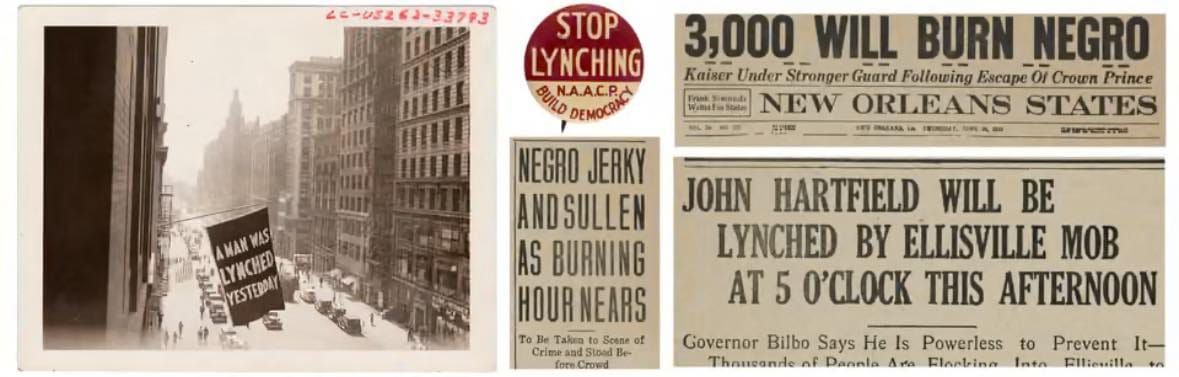
In the Mississippi Delta—just a few miles from the muddy waters where Emmett Till’s body was found floating in 1955—another young Black man, Trey Reed, was discovered hanging from a tree on the campus of Delta State University. Officials wasted no time declaring it a suicide. Before any autopsy was completed, before his family could even process their loss, the system had already written the ending: “no foul play.” It’s a phrase that has echoed through generations of American history—repurposed each time a Black life ends under suspicious circumstances.
As the Chicago Crusader writes in “Lynching by Suicide: The Rebranded Face of America’s Racial Violence,” this is the modern evolution of the same old cruelty. What was once done with a rope and a mob is now buried under paperwork and press releases.
Seventy years ago, Emmett Till was a 14-year-old boy from Chicago visiting family in Mississippi. He was accused—falsely—of whistling at a white woman. Days later, he was kidnapped, beaten beyond recognition, and shot in the head. When his body was pulled from the Tallahatchie River, it was swollen and disfigured—his eye gouged out, a cotton gin fan tied around his neck with barbed wire to weigh him down. The sheriff wanted the body buried quickly, quietly, without questions or photographs. But Emmett’s mother, Mamie Till-Mobley, refused to let America look away. She demanded an open-casket funeral so the world could see what had been done to her son. Tens of thousands filed past his coffin in Chicago, and the images published in Jet magazine became a mirror reflecting America’s soul—ugly, violent, and unrepentant.
Now, Trey Reed’s death in that same region resurrects those ghosts. The violence no longer wears white hoods—it hides behind the language of respectability. The lynch mobs have traded torches for badges and press briefings. The spectacle is gone, but the silence is deafening. The Crusader reports that Trey had recently defended a young woman who was being harassed for her comments about Charlie Kirk, leading to a confrontation with several white students. Days later, he was dead. His phone vanished. His story kept changing—from found in his dorm room, to found hanging outside, to found by “passersby.” His family was told not to ask questions, to accept the official version.
The echoes are haunting. In 1955, they told Mamie Till to bury her son quietly. In 2025, they told Trey Reed’s mother to move on. This is what “lynching by suicide” means: a slow, bureaucratic suffocation of truth. In the old South, the lie was that the mob acted in defense of white womanhood. In the new South, the lie is that the rope was tied by the victim himself. Both exist to protect the system, not the person.
The geography hasn’t changed. The soil of the Mississippi Delta is still heavy with unburied history. Only the language of denial has evolved. Back then, they called it a lynching. Now, they call it suicide. But the silence feels the same. The indifference smells the same. And the message is identical: a Black life can be taken, rewritten, and forgotten—so long as it’s done neatly.
Emmett Till’s body forced America to confront what it was. Trey Reed’s death dares us to confront what it still is.
 Stephanie Gadlin