Modern Day Slavery Is Not a Metaphor — It’s Policy

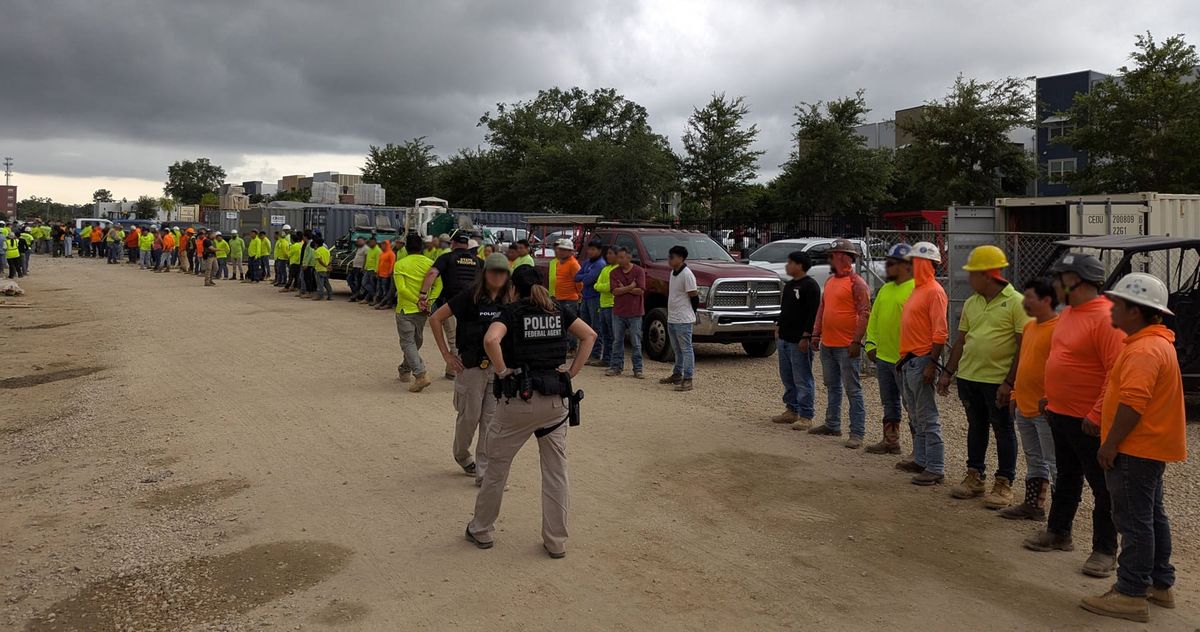
There is a quiet, brutal practice happening across the country in fields, factories, and construction sites. Employers who rely on undocumented workers to keep their businesses running are turning immigration enforcement into a weapon. They recruit laborers through word of mouth, labor brokers, or subcontractors. The workers are told to move fast, to keep quiet, to take whatever pay is offered, and never ask questions. And when payday arrives, or when someone gets hurt, or when a worker asks about overtime, the employer threatens to call ICE. Sometimes they actually make the call. The workers are arrested, detained, or forced to flee, and the employer avoids paying wages, responsibility, or liability. The labor gets done; the workers disappear. It is theft enforced through fear.
Workers in the construction industry describe getting paid far below standard rates and being warned not to complain. One tile setter said, “It’s more work, less pay. We are in their hands.” A union organizer in the Southwest summarized the pattern bluntly: “The more that workers begin to speak up, the faster the calls to ICE come in.” In agriculture, where the work is grueling and margins are tight, similar patterns are common. Large-scale poultry and meatpacking operations, especially in Mississippi, Tennessee, Texas, and Ohio, have seen major ICE raids over the last several years. Hundreds of workers were detained, but the companies continued operating. The crops still got harvested, the processing lines kept moving, and the employers moved on to the next group of scared and desperate laborers.
This is not happening only in conservative states, nor is it exclusive to rural America. California, Washington, Colorado, and Illinois have also seen situations where farms, roofing companies, or subcontracting networks used immigration threats to silence workers. The pattern appears wherever there is a labor-intensive industry, a supply of vulnerable workers, and a system of subcontracting that allows companies to deny responsibility. The common denominator is not simply whether the state is red or blue. It is whether the industry relies on disposable labor. However, the largest, most publicized raids and the most aggressive employer retaliation cases have clustered in Republican-led states where labor protections are weaker, union presence is lower, and state-level retaliation laws are limited or nonexistent. In those environments, the threat of “I’ll call ICE” carries more force because the worker has fewer legal defenses.
There is another layer to this. When you look at the political donations of companies repeatedly implicated in illegal hiring and wage suppression, a pattern emerges. Executives and corporate PACs in poultry, meatpacking, and certain national construction and utility contracting firms overwhelmingly direct their contributions to Republican candidates, especially those who campaign on strict immigration enforcement rhetoric. At first glance this looks paradoxical: why would companies that rely on undocumented labor back politicians who claim they want to stop it? The answer is that these employers do not want immigration solved. They want the system exactly as it is: a permanent, frightened, rightless workforce that cannot negotiate for better wages, cannot report abuse, and can be erased the moment it becomes inconvenient. One labor-rights researcher described it clearly: “The vulnerability of undocumented workers is not accidental. It is the business model.”
Workers caught in this system describe it in painfully simple terms. One farmworker said, “They lowered our pay because they know we can’t say anything.” A drywall laborer in Texas explained, “You don’t complain. If you complain, they call immigration. So we just work.” The words are unadorned, but they describe a form of coercion that is economic, psychological, and violent.
Legally, undocumented workers are entitled to minimum wage, overtime protections, and the right to organize. But rights that cannot be safely used are not rights. If reporting wage theft means risking deportation, the law is merely symbolic. And employers know this. They count on it.
The solution is not complicated in theory, but politically difficult in practice. Labor enforcement must be separated from immigration enforcement so that reporting exploitation does not risk detention. Retaliation for threatening to call ICE must be treated as a serious violation with real penalties. States need to allow workers, regardless of status, to sue for unpaid wages quickly and without fear. And subcontracting chains must be tightened so the company at the top cannot shrug and say, “We didn’t know.”
At its core, this is not just an immigration issue. It is an issue of power. It is about who is allowed to take and who is allowed to have their labor stolen. It is about a system that relies on people who are meant to be invisible, silent, and disposable. And until that changes, the fields will be picked, the houses will be built, the profits will be made, and the people who made it all possible will keep disappearing.