The $130 Million Lie
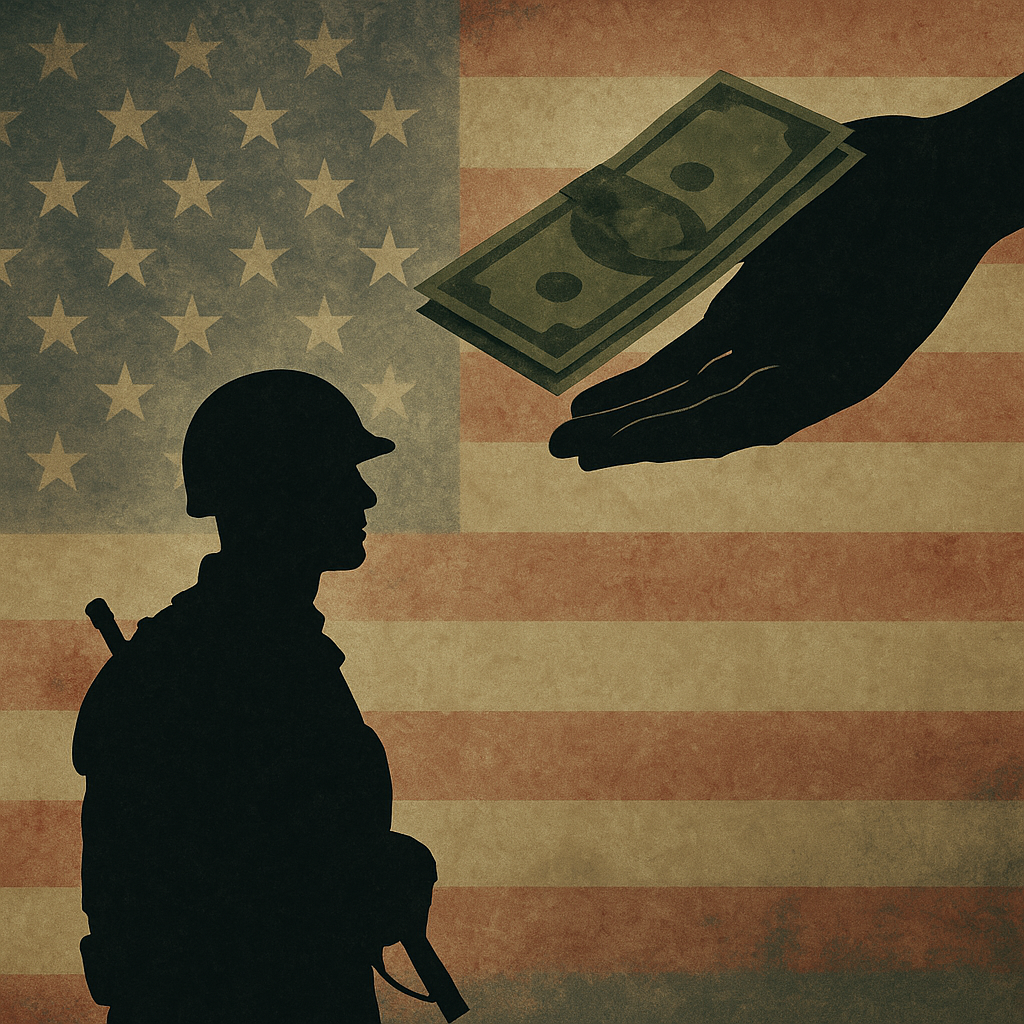
The Trump regime is telling a story, and like most authoritarian narratives, it is simple, emotional, and easy to repeat: the Democrats failed the troops, and Trump stepped in personally to save them. According to the story, the military has Trump and his wealthy allies—not Congress, not the Constitution, not the American people—to thank for their paychecks. The problem is that none of it is true. The much-publicized $130 million donation from billionaire Timothy Mellon amounts to roughly $100 per service member. The U.S. military needs around $457 million every day just to cover payroll. One hundred and thirty million dollars is a drop in the bucket. It is not a solution. It is theater, designed to look patriotic and powerful to anyone who doesn’t stop to do the math.
The real series of events is far more dangerous. Trump manufactured the shutdown that created the crisis in the first place. Then he ignored the Constitution and violated the Anti-Deficiency Act by unilaterally transferring eight billion dollars from research and development accounts to cover military pay. The Constitution is explicit that only Congress controls federal spending. Article I, Section 9 states that no money shall be drawn from the Treasury except through appropriations made by law. This is not a suggestion. It is the foundation of representative government. Yet the moment Trump decided that constitutional limits didn’t apply to him, no one stopped him. The Pentagon then accepted Mellon’s donation and publicly thanked him, repeating the regime’s propaganda that Democrats had chosen to “withhold pay from troops.” What actually happened is the standard authoritarian playbook: create the crisis, break the rules to “fix” it, blame your opponents for the damage, and take credit as the savior of the institutions you yourself destabilized.
The donation was never about money. It was about loyalty. The intended message to service members is clear: your financial stability, your livelihood, your security—those do not come from Congress or the American system of government. They come from Trump and the people aligned with him. If the military begins to believe that its allegiance is to a leader rather than to the law, the constitutional republic has already begun to collapse. A free society cannot survive when the armed forces transfer loyalty from the state to an individual. And that is exactly the narrative being cultivated.
The painful truth is that the Constitution was never designed to prevent this. The Anti-Federalists warned from the beginning that the executive branch would grow into something more powerful than the monarchy Americans had rebelled against, and that a standing army under its authority would be a threat to liberty. James Madison dismissed those warnings, arguing that ambition would naturally check ambition. He assumed leaders would restrain themselves out of respect for the system. He assumed political virtue would survive. He was wrong. The Constitution only works when the people in power choose to respect it. Once someone in authority decides that the rules do not matter, and no one stops them, the restraints exist only on paper.
There is a darker layer beneath all of this. The founders did not build a system to promote democracy. They built one to restrain it. They openly feared multi-racial, universal political participation. Washington, Jefferson, and Madison believed that expanding the political rights of ordinary people—especially Black Americans—would destroy the republic they envisioned. The Senate, the Electoral College, the structure of representation itself were all designed to limit majority rule while maintaining the appearance of popular sovereignty. Trump is not an anomaly. He is a continuation of the system’s original logic: concentrated executive power used to protect a narrow, exclusionary vision of who should hold power in America and who should not.
Trump represents both the failure the Anti-Federalists predicted and the fulfillment of the Federalists’ original assumptions about who is meant to rule. The spectacle of the billionaire donation and the dramatic insistence that the regime alone stands with the troops is not just propaganda—it is a reordering of loyalty. It signals that Congress is irrelevant, that constitutional appropriation is optional, that law exists only when the powerful choose to recognize it. The founders believed tyranny would be hard to stop once it began, and they were right. They simply assumed the tyrant would look like them, and in many ways, he does.
The story right now is not about money. It is about power. And the message is simple: the military belongs to the regime. The Constitution has no answer to a leader who stops pretending it matters. It was designed that way.