The Dangerous Marriage of Faith and Nation

For much of the 20th century, fascism, white supremacy, and religious nationalism operated as separate forces — but they share a common root: the idea that one people, faith, or race is divinely chosen and morally entitled to power. In the U.S., that ideology wore the face of Christian nationalism. In Israel, it has evolved through political Zionism into a form of religious nationalism that now defines much of its modern politics. Both movements arose from legitimate historical fears and traumas — yet both have been co-opted by power structures that use faith to justify inequality and violence.
Zionism, in its original form, was not a religious idea. It emerged in the late 1800s among secular European Jews facing pogroms and systemic persecution. Thinkers like Theodor Herzl saw the creation of a Jewish homeland as a practical refuge — a political solution to centuries of oppression. But as with most nationalist movements, the longer it fused with state power, the more it absorbed messianic and exclusionary elements. After the 1967 Six-Day War, when Israel captured the West Bank, East Jerusalem, and Gaza, religious Zionists began framing these conquests as divinely ordained — fulfilling biblical prophecy rather than political expansion. From that point, nationalism and religion became intertwined. The modern Israeli far right often uses the Torah to justify permanent control over Palestinian territories, arguing that these lands were promised by God and therefore cannot be shared.
This shift mirrors how Christian nationalism operates in the United States. Here, too, religion has been politicized — used to sanctify domination rather than compassion. When people say America was “founded as a Christian nation,” they often mean it should be ruled by their interpretation of Christianity. When politicians say “Make America Great Again,” they’re invoking a nostalgic myth — a time when white Christians held unchallenged social power. In both cases, the faith becomes a tool for exclusion. God’s love is reduced to a tribal slogan.
In Israel, this same theological nationalism fuels policies that deny millions of Palestinians equal rights. Far-right leaders like Itamar Ben-Gvir and Bezalel Smotrich have explicitly called for annexation of the West Bank and for Palestinians to “emigrate” — language eerily similar to the rhetoric of American segregationists or European fascists. These politicians invoke scripture as political authority, insisting that Jewish sovereignty over the land is a divine mandate. But many Jewish scholars, rabbis, and everyday citizens reject this. They argue that Judaism’s core teachings — justice (tzedek), compassion (chesed), and the sanctity of human life — are incompatible with occupation and apartheid.
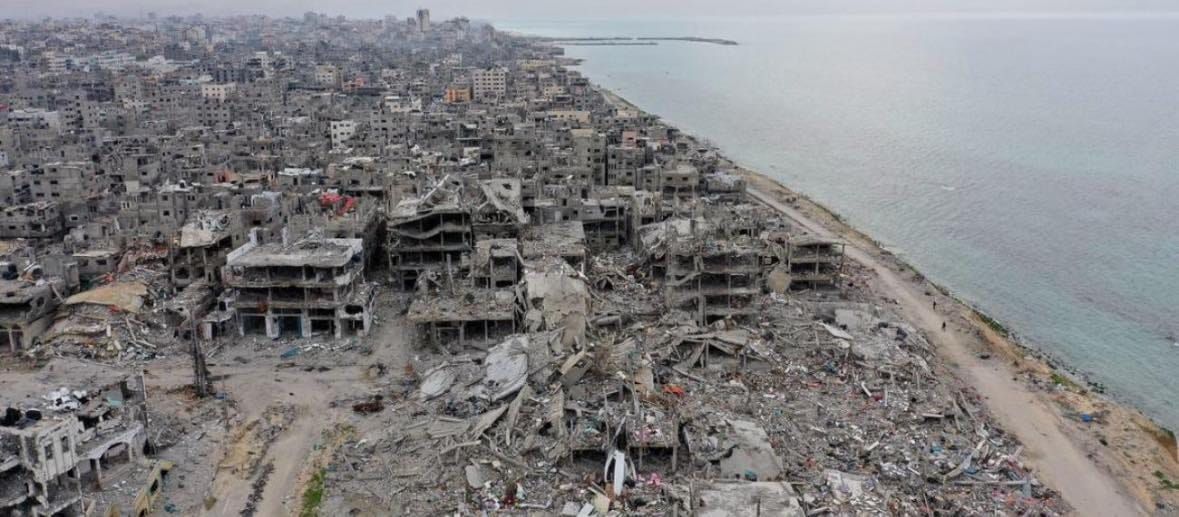
And that rejection isn’t marginal. Most American Jews do not support the Israeli government’s current actions. Polls by Pew, J Street, and others show that the majority oppose settlement expansion, favor Palestinian statehood, and are horrified by the humanitarian crisis in Gaza. Many American Jews grew up believing “never again” meant never again for anyone — not only Jews. Organizations like Jewish Voice for Peace, IfNotNow, and Breaking the Silence have mobilized around that idea, declaring: “Our safety will never come at the cost of another people’s freedom.” This moral stance is deeply Jewish, echoing prophetic traditions that speak truth to power.
Yet the Israeli government, like nationalist regimes everywhere, has learned to use identity as a shield. It equates criticism of its policies with antisemitism — silencing dissent by conflating opposition to occupation with hatred of Jews. That’s both morally wrong and historically dangerous. It mirrors the same manipulation Christian nationalists use in America, where questioning the fusion of church and state gets labeled “anti-Christian.” In both cases, religion is weaponized to protect political power.
The overlap goes even deeper. Christian Zionism, a powerful force in U.S. politics, reinforces this dynamic. Millions of American evangelicals see Israel not as a democracy to support but as a prophetic stage for the end times. They back right-wing Israeli policies not out of solidarity with Jews but to fulfill their own apocalyptic beliefs — that Christ’s return requires Jewish sovereignty over all of Israel. This alliance, though politically convenient, is morally toxic: it binds American Christian nationalism to Israeli religious nationalism, forming a feedback loop of mutual extremism. Each side tells the other that their cause is holy, and each uses the other’s legitimacy to silence internal dissent.
Meanwhile, Palestinian Christians, Muslims, and secular citizens — who have lived on that land for generations — are treated as outsiders, even threats. Their displacement and suffering are framed as unfortunate necessities in a divine plan. It’s the same logic that justified Manifest Destiny in America — that expansion and conquest are God’s will. And just like Manifest Destiny, it leads to dispossession, ethnic cleansing, and the erasure of entire cultures.
The truth is this: Judaism is not Zionism, and Zionism is not Judaism. One is a faith grounded in moral law, compassion, and covenant. The other is a political ideology that, like any nationalism, can be corrupted by power. There are deeply spiritual, ethical Zionists who believe in coexistence and peace — and there are militant ones who use religion to justify apartheid. To conflate them is to erase the diversity of Jewish thought and experience.
When religion and nationalism fuse, they create something larger and darker than either alone. They create a sacred nationalism — one that cannot be questioned because to do so is treated as heresy. In both Israel and America, this dynamic erodes democracy, hardens identity, and dehumanizes others. In both cases, it tells the majority that they are under divine attack and must reclaim their destiny. And in both cases, it weaponizes fear — the oldest trick of authoritarianism.
We have to be able to hold two truths at once: that Jewish people deserve safety and sovereignty after centuries of persecution, and that Palestinians deserve freedom, dignity, and a homeland of their own. Supporting one does not require denying the other. The same moral clarity that demands we reject white Christian nationalism here must also compel us to reject religious nationalism anywhere — even when it cloaks itself in familiar faith.
What’s happening now in Israel and Palestine is not a battle of religions but of ideologies — between those who believe power sanctifies itself, and those who believe morality must restrain it. The great tragedy is that both Jewish and Christian traditions contain within them the seeds of peace — compassion, justice, humility — yet those values are smothered when religion becomes a weapon.As history shows — from the German American Bund to the Klan, from “America First” to modern Zionist extremism — nationalism wrapped in holiness always leads to blood. And until we can separate faith from conquest, we will keep mistaking domination for destiny.