The Day America Turned Its Guns Inward
We are in a deadly serious moment — not theoretical, not distant, not something that can be brushed off as political noise. There is a growing willingness in this country to deploy the National Guard, or even the regular military, inside American cities. Some people think that’s normal, that it’s “law and order,” that it will keep the peace. But history shows clearly: when a government turns soldiers toward its own people, it is not protecting the public, it is protecting power. The National Guard was created to defend this nation and help it heal in moments of real crisis — hurricanes, floods, pandemics. Guardsmen are neighbors, co-workers, parents — citizens in uniform. They are not meant to become a domestic police force, and when they are forced into that role, the line between protection and coercion disappears quickly. Once troops are placed among civilians, the potential for tragedy becomes a matter of seconds, noise, confusion, fear.
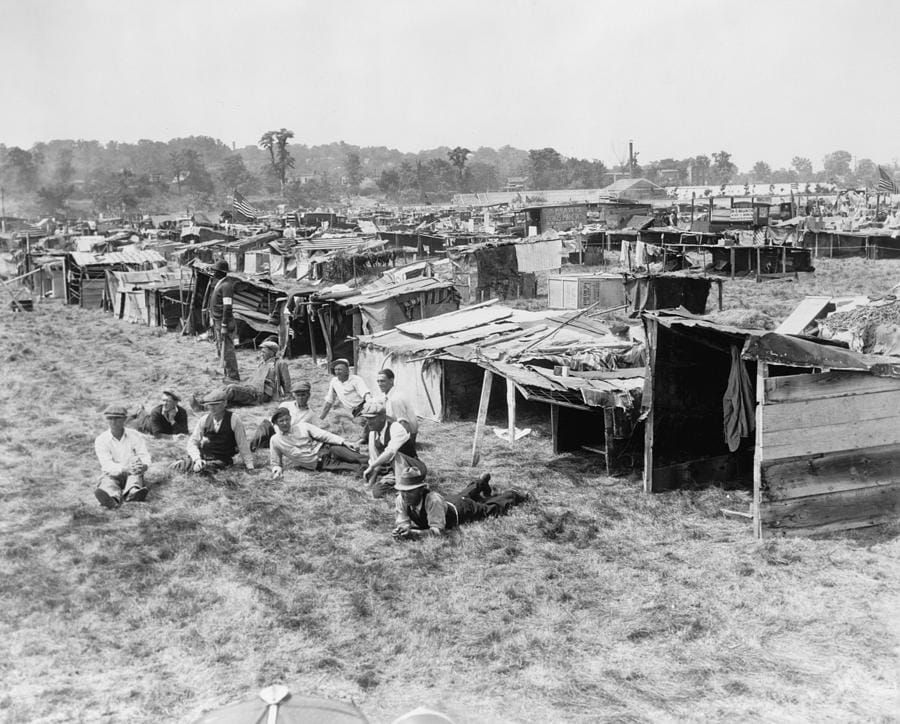
In the summer of 1932, Washington, D.C. filled with men who had fought in World War I. They came home to the Great Depression, to starvation and unemployment. The government had promised them financial compensation for their service, but payment was delayed. Desperate to feed their families, they traveled across the country to the capital. They called themselves the Bonus Expeditionary Force — the “Bonus Army.” They built a peaceful camp on the National Mall. They sang patriotic songs. They carried their medals. They asked only for what they had earned in war. The government responded not with negotiation, but with force. Tanks rolled through the capital. Cavalry units charged. Soldiers wearing gas masks drove them from the city as their tents and shelters burned behind them. Men who had once defended the country were treated as enemies of the state. Their wives and children ran through clouds of tear gas. Their flags were trampled into mud.
This was not an isolated moment. In 1877, during the Great Railroad Strike, federal troops killed dozens of workers. In 1894, during the Pullman Strike, soldiers killed more in the name of protecting corporate interest. In 1970, at Kent State, National Guardsmen fired into a crowd of unarmed students protesting the Vietnam War — thirteen seconds of gunfire that changed a generation. Four young Americans died. Nine were wounded. Two weeks later, at Jackson State College, police killed two more students, this time Black. The country barely noticed. Different places, different decades, same pattern: when the government feels threatened, it answers not with accountability, but with force.
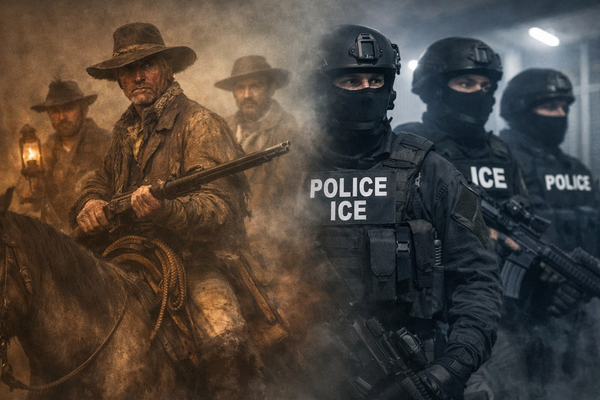
Today we see armored vehicles in city streets, helicopters hovering low over crowds, troops positioned near political demonstrations and sometimes steps from polling places. Some have already grown used to it, accepting it as normal. But this is not safety. This is conditioning. This is the quiet introduction of fear into public life. The danger isn’t only in what troops might do intentionally — it is in how chaos works. Crowds are loud, tense, unpredictable. Most Guardsmen are barely older than the protesters they face. All it takes is one loud crack that someone mistakes for a gunshot, one soldier who thinks he is following an order, one moment of panic, and history repeats itself.
This is not about political sides. It is about whether the government remains accountable to the people or begins expecting the people to submit. When governments use soldiers to manage dissent, it is not to maintain peace — it is to suppress opposition. Authoritarianism does not arrive all at once. It expands slowly, justified each time as “temporary,” “necessary,” “for your own good.” Soldiers in the streets. Then troops at demonstrations. Then troops protecting buildings. Then troops “monitoring” elections. Eventually, the presence feels permanent, and silence feels like stability, and people convince themselves that freedom can coexist with intimidation.
The Bonus Army was not just a story in a history book — it was a warning. A democracy cannot survive if the state begins treating its citizens as threats. And once soldiers are turned inward, the nation is changed forever. The question now is whether we recognize the moment we are in, and whether we are willing to speak before the silence becomes too deep to break.