The Deputized Mob: How State Power Becomes the Enforcer of Ideology

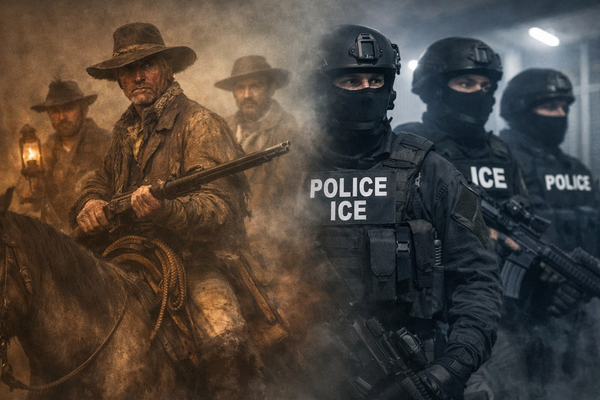
Donald Trump is transforming Immigration and Customs Enforcement into something far beyond a federal law enforcement agency. It is becoming, in practice, a political militia—an arm of ideological enforcement rather than neutral law. This transformation was not spontaneous. It was foretold. In 2024, before Trump’s return to power, legal scholar David Null warned that the MAGA movement was attempting to normalize vigilantism—not merely as a cultural phenomenon but as a mode of governance. His argument was clear: when the state stops prosecuting political violence and begins recruiting the kinds of people who are willing to carry it out, democratic institutions cease to function. Less than a year into Trump’s second term, that shift is underway.
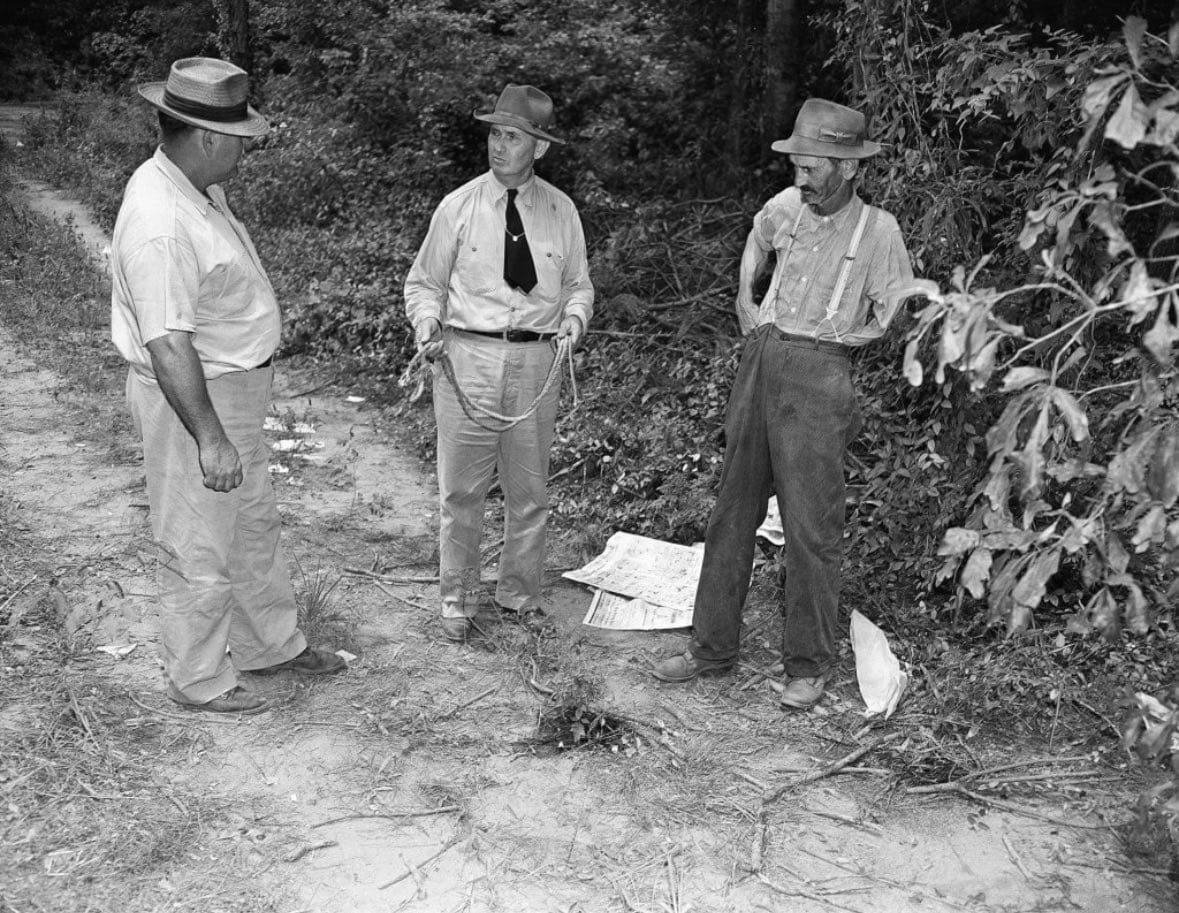
The United States has lived through this pattern before. After Reconstruction, white vigilante terror was not simply the rage of mobs—it was a political technology. Groups like the Ku Klux Klan, the White League, and the Red Shirts enforced white supremacy when state governments lacked either the legitimacy or the legal structures to do so openly. Their lynchings, burnings, and public executions were rarely prosecuted; when they were, juries acquitted, governors pardoned, and sheriffs declined to intervene. During the 1898 Wilmington insurrection, a white mob overthrew a lawfully elected multiracial government while state militias observed in complicity. Violence was not outside the law; it was carried out in front of the law—and the law looked away.
The same logic guided the rise of European fascism. Mussolini’s Blackshirts and Hitler’s Brownshirts began as unofficial street enforcers—beating opponents, terrorizing neighborhoods, disrupting elections. But once their movements took power, the vigilantes were not dissolved. They were absorbed into the security apparatus. Their violence did not cease; it was authorized. Their loyalty was rewarded not with discipline, but with uniforms, salaries, and legal immunity. The police did not restrain them; they coordinated with them.
Latin American military juntas perfected this method. Paramilitary death squads did the work the state preferred not to acknowledge. Their purpose was not policing, but fear. Their power did not come from law—it came from law’s refusal to restrain them.
Today that same pattern is reemerging in the United States, and the shift is not subtle. It is not simply that ICE has expanded its operational latitude. It is that the internal culture of the agency has begun to change. Over the past decade, multiple investigations and leaked internal message boards have revealed clusters of ICE personnel sharing white supremacist memes, violent rhetoric, and racist conspiracy theories. In earlier years, these revelations caused scandal. Now they function as recruitment signals. The message is unmistakable: those who already view immigrants as subhuman, criminal, or invaders will find both employment and empowerment here.
In that environment, white supremacist groups do not merely infiltrate the institution—they are incentivized to join it. The badge becomes a weapon, the uniform becomes armor, and ideological hatred becomes state function. Where older forms of white supremacy hid behind hoods and anonymity, the modern version hides behind procedures, task forces, and operational directives. Deportations become raids, raids become hunts, and hunts become demonstrations of loyalty to the leader rather than to the law.
Trump’s pardons of the January 6 rioters cemented this shift. Political violence done in his name is not merely excused—it is valorized. Those who prove loyalty through force are assured protection. Those who commit violence for the state are promised that the state will commit loyalty in return.
This is the point David Null called state-supported vigilantism: where the government no longer needs to outsource violence because violence has been fully integrated into governance. When the law ceases to restrain power and instead exists to shelter those who wield it, the state becomes indistinguishable from the mob. Violence becomes patriotic. Dissent becomes treason. The rule of law becomes a costume worn by power to disguise its abandonment.
This is the edge the United States now stands upon—where enforcement no longer follows the law but follows the leader. Where ideology determines who is protected and who is hunted. Where the state no longer guards against the mob because the state is the mob.
And history shows, consistently, that once a government crosses this threshold, it does not “slide” into authoritarianism.
It arrives there—suddenly, and all at once.