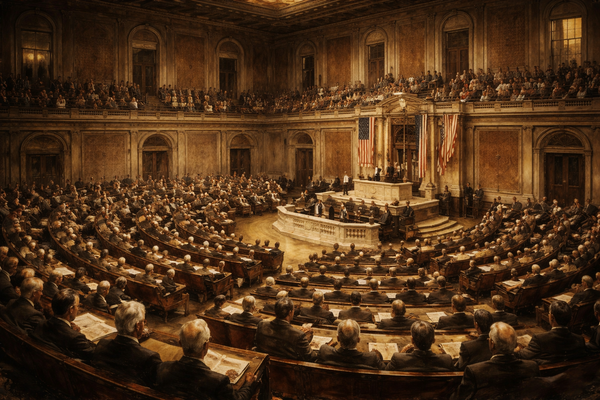
The Federalist Panic of the 1790s — and What It Teaches Us About Resistance Today
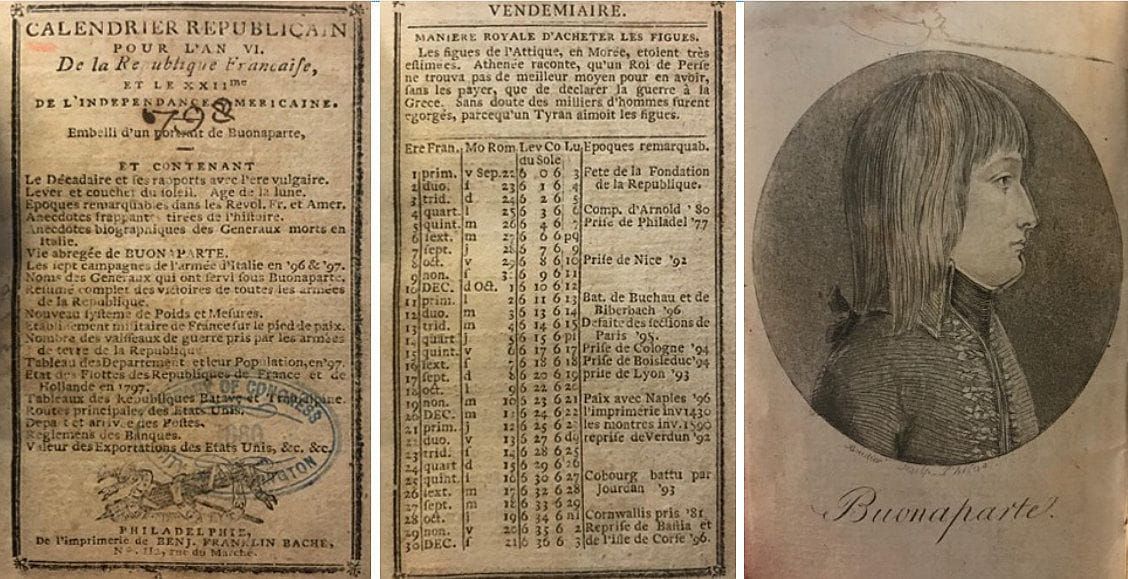
In the spring of 1797, Benjamin Franklin Bache stood outside his Philadelphia printing office and was beaten in the street. His offense was publishing criticism of President John Adams in his newspaper The Aurora. His attackers were not criminals or hired ruffians. They were respectable Federalists—merchants, lawyers, and officeholders—men who believed themselves guardians of public virtue. They attacked him not out of private spite but from a conviction that they were defending the republic itself. This was not a lapse in public order. It was the exercise of power by those who believed they were entitled to decide who could speak, and at what cost. In their eyes—and in practice—they were the state.
The ordeal of Bache reveals a central tension of the 1790s: who owned the American Revolution? The Federalists, led by figures such as Alexander Hamilton and John Adams, believed they were not merely a political party but the rightful stewards of the nation’s future. They had guided the Constitution’s framing, staffed the first national government, and managed the complex early diplomacy of the republic. They saw themselves as the rational, educated class that must keep the nation from chaos. Dissenters, therefore, did not appear to them as fellow citizens engaged in legitimate disagreement. They appeared as threats to the very project of stable republican government.
This fear intensified with the French Revolution. To Thomas Jefferson and the Democratic-Republicans, the French uprising represented the global unfolding of the same democratic spirit that had driven American independence. To the Federalists, it demonstrated the horrors of unchecked popular power—riot, bloodshed, and the collapse of order. The United States stood, in their minds, on the knife’s edge between stability and anarchy. And so political disagreement became conflated with disloyalty. Criticism of policy was interpreted as sympathy for radical revolution. Opposition newspapers were recast as instruments of foreign subversion. The idea that the republic might survive a clash of competing visions seemed, to the Federalists, dangerously naïve.
This conviction produced a transformation in the relationship between party and state. Long before new laws formalized repression, Federalist supporters began to attack opposition printers, disrupt political meetings, and create informal surveillance networks. Federal marshals, meant to uphold neutral enforcement of the law, increasingly acted in alignment with party interests. Public officeholders saw themselves not as representatives of a shared polity but as defenders of a fragile order under siege.
By 1798, the Federalists held both the presidency and Congress and moved to convert these impulses into statute. The Naturalization Act extended the residency requirement for citizenship from five to fourteen years, sharply curtailing the political influence of immigrants who tended to support Jefferson’s party. The Alien Friends Act empowered the president to deport any non-citizen he deemed “dangerous,” without judicial review. The Alien Enemies Act allowed the removal of citizens of hostile nations during wartime, a provision that—modified but still recognizable—remains in U.S. law today.
The most sweeping measure was the Sedition Act. It made it a crime to publish “false, scandalous, and malicious” writings about the president or the federal government. The law was written with great care. Criticizing Vice President Jefferson remained legal. Only the defenders of the existing administration were protected. In effect, the Sedition Act criminalized opposition itself.
Its enforcement was swift and pointed. Newspaper editors, pamphleteers, and political organizers were arrested across the country. Congressman Matthew Lyon of Vermont was imprisoned for writing that Adams possessed “an unbounded thirst for ridiculous pomp.” He was reelected while still confined. Benjamin Franklin Bache, already under indictment, would not live to see trial; he died of yellow fever in 1798. His wife, Margaret, continued publication of The Aurora, undeterred.
The Alien and Sedition Acts achieved what they were designed to achieve. Opposition newspapers were silenced or intimidated. Immigrant political influence was curtailed. Lines of free criticism narrowed. A ruling faction believed, sincerely, that it was saving the republic from internal collapse. In doing so, it took the form of the very authoritarianism it claimed to resist. The Federalists did not intend to dismantle liberty. They simply believed that liberty could not survive without their exclusive stewardship.
The response did not come through the courts, which at the time lacked clear authority to strike down federal legislation. Instead, resistance developed through political organization. Democratic-Republicans created new newspaper networks, expanded local political societies, and produced a shared language of constitutional critique. Jefferson and James Madison drafted the Kentucky and Virginia Resolutions, which argued—controversially—that states could declare federal laws unconstitutional. Though these resolutions had no legal force, they reframed the national debate. The issue was no longer whether the government should suppress dissent, but whether the government had the constitutional authority to do so at all.
By the election of 1800, the Federalists had overreached. Their claim to exclusive legitimacy collapsed under the weight of electoral repudiation. Jefferson’s victory marked the first peaceful transfer of power between rival parties in modern republican history. His administration allowed the Sedition Act to expire and pardoned those convicted under it. The Federalist Party never recovered its former dominance.
The crisis of the late 1790s did not end because the system was inherently self-correcting. It ended because organized opposition refused to be silenced, built alternative institutions, and asserted a competing vision of the republic’s meaning. The episode demonstrated that no faction could claim permanent custody of the American experiment. The republic proved more expansive than the ambitions of any one group—even those who believed themselves indispensable to its survival.
The beating of Benjamin Franklin Bache, the prosecutions under the Sedition Act, and the eventual fall of Federalist power together reveal a central truth of the early republic: the struggle to define the nation was ongoing. Authority in a republic is never final. It must be continually contested, continually renewed, and continually defended from those who mistake their own authority for the nation itself.