The Great Depression: The Disaster That Was Already Waiting to Happen

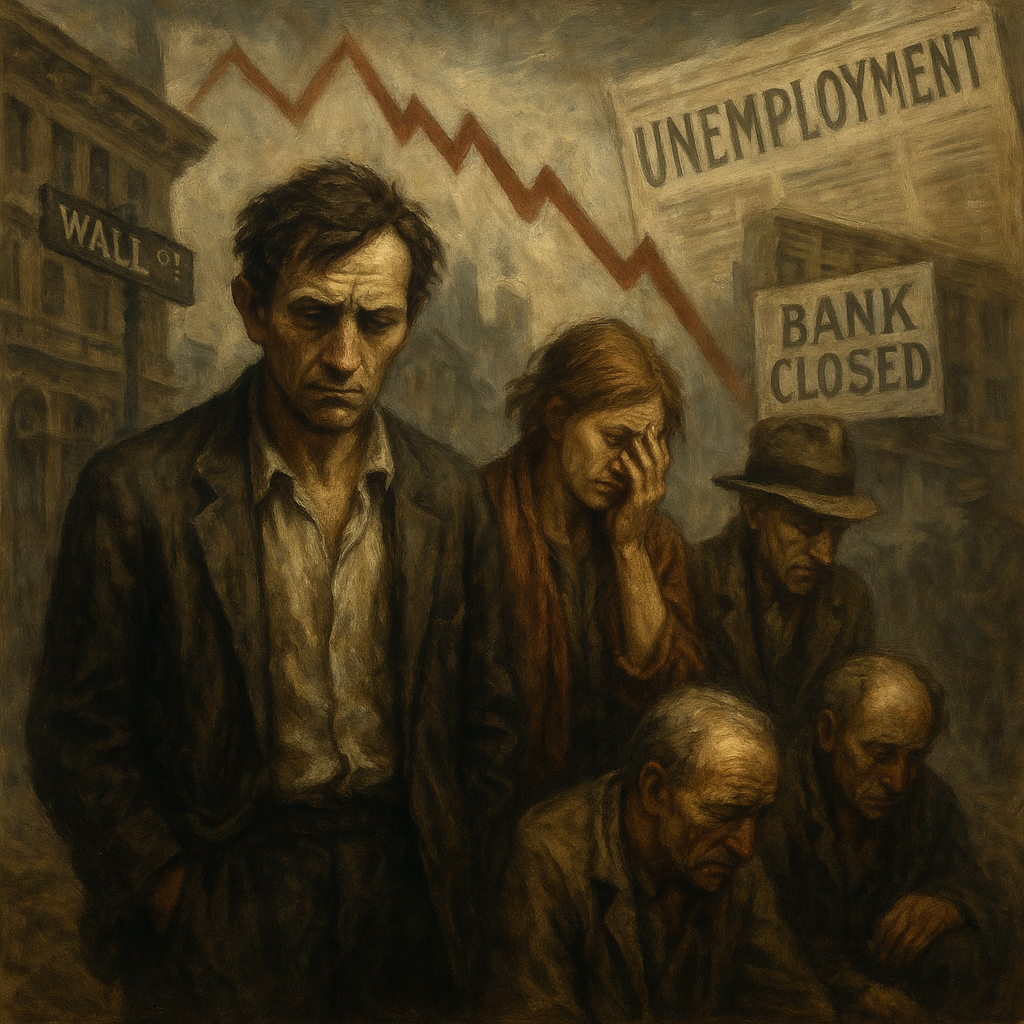
The Great Depression did not begin with the stock market crash of 1929—it was simply the spark that ignited a fire already smoldering beneath the surface. For most of the 1920s, the United States appeared to be thriving. Industry was booming, the stock market was soaring, and consumer confidence seemed limitless. But underneath that optimism lay structural weaknesses—policies and behaviors that made collapse almost inevitable once confidence cracked.
The prosperity of the Roaring Twenties was built on credit. Americans were buying more than ever before, but they were buying on installment plans—cars, radios, appliances, even homes—all financed through easy loans. Corporations did the same, borrowing heavily to expand production and chase rising demand. It was an economy built on borrowed time. When spending slowed or credit tightened, the whole illusion would unravel. Today, that same dynamic exists in the form of household debt, margin trading, and corporate borrowing at historic highs, all supported by faith that asset prices will keep rising forever.
During the 1920s, the government embraced laissez-faire economics and trickle-down tax policies. Treasury Secretary Andrew Mellon pushed through massive tax cuts for corporations and the wealthy, arguing that investment would flow down to workers. Instead, the money flowed into speculation—particularly the stock market. The same logic still echoes today, where corporate tax cuts and deregulation are sold as tools for growth but often lead to record buybacks, inflated stock prices, and deeper inequality. Then, as now, the richest grew richer while the average worker’s wages stagnated.
The Federal Reserve, created to stabilize the economy, made a critical error. In trying to curb stock market speculation, it tightened the money supply, raising rates and choking credit to businesses and farmers. When the crash came, it failed to intervene quickly, allowing the money supply to contract by a third. Modern central banks have learned from that mistake, but echoes remain: delayed responses to inflation, sudden tightening cycles, and an overreliance on market confidence still make economies vulnerable to panic.
Farmers, too, were in crisis long before Wall Street fell. After World War I, global demand for American crops collapsed, leaving farmers with heavy debts and plunging prices. By the time drought struck the Midwest, rural America was already in depression. That fragility mirrors today’s agricultural dependence on subsidies, global trade routes, and unpredictable climate patterns—one major disruption away from disaster.
Perhaps the most dangerous parallel lies in the culture of speculation. In the late 1920s, Americans poured their savings into stocks, often buying on margin with only a fraction of the cost down. When prices fell, panic spread instantly. Today’s speculative frenzy plays out through meme stocks, cryptocurrency, real estate, and AI-driven markets. The technology is new, but the psychology is ancient: greed disguised as optimism.
When the system finally collapsed in 1929, the illusion of endless growth shattered. Millions lost their jobs, savings evaporated, and families were torn apart. The Depression revealed that the economy had never been as strong as it looked—it was a pyramid built on credit, inequality, and blind faith in the market.
The same warning applies today. Rising debt, wealth concentration, speculative bubbles, and political inaction echo the mistakes of the 1920s. History reminds us that economic collapse rarely arrives overnight. It creeps in slowly, hidden behind record profits, booming markets, and the comforting lie that this time, it’s different.
The truth is, it never is.