The Hidden Origin of the Religious Right
Before abortion became the defining moral issue of the Christian Right, the Southern Baptist Convention — the largest Protestant denomination in the United States — held a very different view. In the 1960s and early 1970s, Southern Baptists were generally moderate or permissive about abortion in cases of rape, fetal deformity, or threats to the mother’s health. Their 1971 convention even passed a resolution calling for laws that would allow abortion under those circumstances. At the time, abortion was widely understood as primarily a “Catholic issue,” not a Protestant one.
So how did America’s largest Protestant denomination move from pragmatism to absolutism in just a few years?
The answer wasn’t theological awakening.
It was politics.
After Brown v. Board of Education and the Civil Rights Movement dismantled legal segregation, white evangelical churches in the South faced an identity crisis. Many of their private Christian schools — which had often been created to avoid integration — began to lose their tax-exempt status when the federal government started enforcing civil rights law. This, not abortion, was the first major spark of political mobilization among the white evangelical South.
As historian Randall Balmer and others have shown, the Religious Right didn’t initially form to “save unborn children.” It formed to preserve segregated schools and the racial social order those institutions upheld. The movement’s leaders quickly realized, however, that openly defending segregation was no longer politically viable.
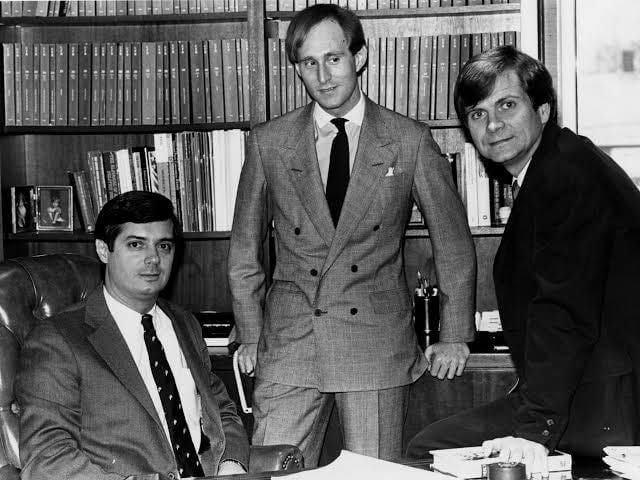
Enter Paul Weyrich — a conservative strategist skilled in converting cultural anxiety into political power. He spent years searching for an issue that could unite conservative Protestants and Catholics under one moral banner. He tried school prayer, feminism, pornography. None of them hit with the same emotional force. But abortion did. It was visceral. It was visual. It was simple. And crucially, it allowed white evangelicals to channel the same anxieties about changing social hierarchies — race, gender, culture — into a new cause that felt righteous instead of reactionary.
By the late 1970s, Weyrich and Jerry Falwell had turned abortion into the unifying battle cry of the emerging Religious Right. What followed was the creation of the “Moral Majority” — a voting bloc powerful enough to reshape American politics. Ronald Reagan, who had once signed one of the most permissive abortion laws in the country as governor of California, was reinvented as the champion of “family values,” and white evangelicals became the backbone of the Republican Party.
This shift was carried along by the Southern Strategy — the political playbook that swapped explicit racism for coded language. In the 1950s you could say the quiet part out loud. By the late 1960s, you couldn’t. So the rhetoric shifted. “Segregation” became “states’ rights.” “Maintain the racial hierarchy” became “protect the traditional family.” Eventually, “keep our schools white” became “stop the abortion holocaust.” The emotional core remained the same; only the language changed.
And here is the uncomfortable truth:
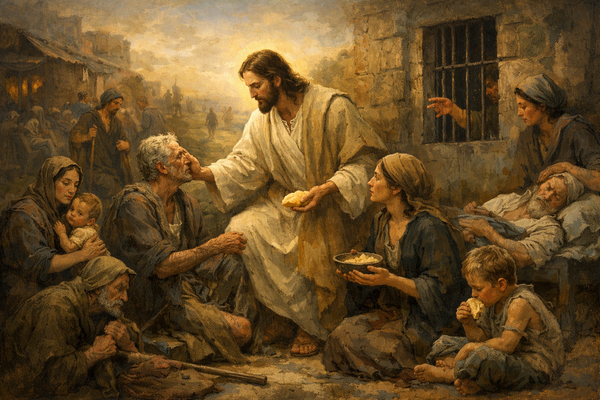
The Bible does not clearly condemn abortion. Not once. The Old Testament contains laws that assign different values to life depending on its stage. There are stories of God ending the lives of adults and children alike. The same Scripture that many claim as an argument for fetal personhood spends far more time commanding care for the poor, the refugee, the imprisoned, the widowed, the sick, the powerless. Jesus himself defined righteousness by how one treats “the least of these.”
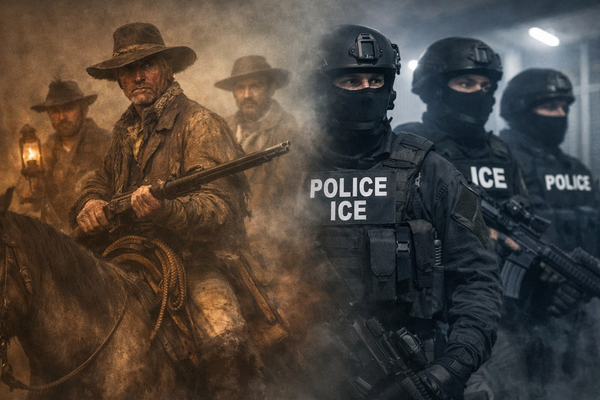
Yet the modern pro-life movement has built a political identity around punishing immigrants, restricting women’s autonomy, cutting support for the poor, and elevating state power over private suffering — while wearing the language of Christian morality like a badge.
This was never fundamentally about theology.
It was about maintaining power.
The modern pro-life movement did not emerge from church pews. It was engineered in think tanks and strategy sessions. It was the rebranding of a defeated segregationist order into a new moral crusade. The names changed. The slogans softened. But the underlying purpose — to preserve a particular social hierarchy — remained.
So when politicians stand at podiums and declare that they are protecting “life,” it is worth asking:
Whose life?
Whose power?
Whose control?
Because if they were truly guided by the Gospel they invoke, they would remember who Jesus said we are judged by how we treat:
Not the powerful.
Not the comfortable.
Not the ones in control.
But the ones with no voice at all.
And deep down, they know exactly which side he would be standing on.