
The Human Supply Chain: Turning Migrants Into Revenue Streams

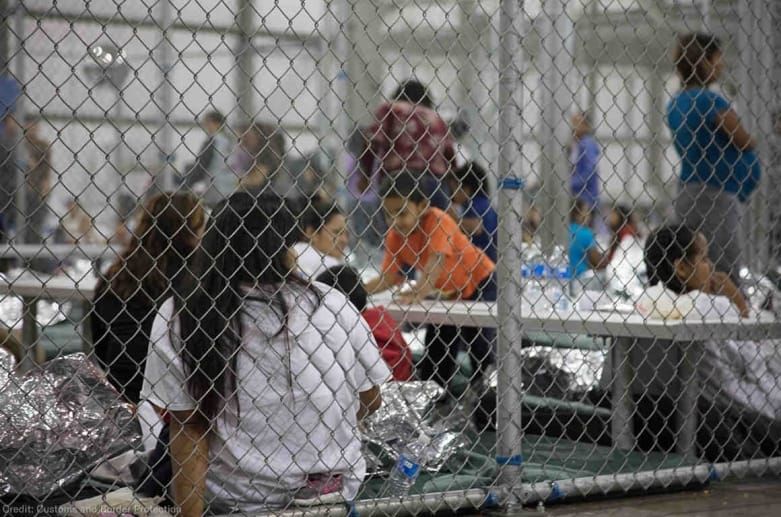
The U.S. immigration detention system is one of the most profitable industries that most Americans never think about — a machine that runs on fear, funded by taxpayers, and sustained by the bodies of human beings. What began as a mechanism to enforce border policy has quietly evolved into a corporate business model, one in which the suffering of migrants is not an unfortunate side effect — it is the product itself.
Every person who crosses the border and ends up in a detention center becomes a billable unit. ICE pays private contractors per detainee, per day, roughly the price of a hotel room — except there is no comfort, no dignity, and no freedom. That money does not go toward integration services or legal support. It flows instead to two massive corporations — GEO Group and CoreCivic — which control the overwhelming majority of ICE detention centers. They have transformed incarceration into a multi-billion-dollar enterprise, where executives speak of “growth opportunities” the way tech companies discuss market expansion. Their shareholders celebrate rising “utilization rates,” which is simply a sanitized phrase for more human beings locked away.
This is not a system built around justice or public safety. It is a logistical pipeline optimized for guaranteed revenue. The government signs multi-year contracts ensuring that private detention companies get paid whether beds are filled or empty. The incentive is clear: the system must always find bodies to justify its cost. Immigration policy becomes a supply chain — and the “supply” is people.
The legal framework that allows this system to operate is equally insidious. Immigration detention is classified as civil, not criminal, which means many of the constitutional protections that apply to someone awaiting trial — including due process and protections against forced labor — can be suspended. This creates a parallel system of confinement where the Constitution effectively stops at the door and profit takes its place.
For years, Congress has funded ICE using what is essentially a detention quota — guaranteeing tens of thousands of paid beds every day. When facilities sit empty, corporations still collect checks. When they overflow, the companies expand and secure even larger contracts. GEO Group recently secured a billion-dollar agreement to reopen Delaney Hall in New Jersey. CoreCivic is expanding massive family detention centers in Texas that can hold thousands, including children. ICE’s long-term planning aims for nearly triple the currently budgeted detention capacity.
And inside these facilities, human beings become labor. Detainees clean, cook, and maintain the buildings for as little as one dollar a day — work that in any other circumstance would violate labor laws. Families on the outside are charged exorbitant fees for phone calls and video visitations, generating new revenue streams from the emotional pain of separation. The companies do not simply profit from detention; they profit from the isolation, vulnerability, and despair that detention creates.
These corporations have learned that cruelty is economically efficient. The harsher the rhetoric around immigration, the more voters accept punitive policies. The more punitive the policies, the more arrests. The more arrests, the more contracts. GEO and CoreCivic, in turn, spend millions lobbying Congress to ensure that cycle never stops. This is not an accident. It is a carefully engineered feedback loop where fear is the fuel and profit is the goal.
What we are witnessing is the commodification of human life. People seeking asylum, fleeing war, escaping poverty, or simply searching for safety are transformed into revenue streams. Their freedom is measured in daily profit margins. Their dignity is accounted for in quarterly earnings reports. The longer they stay locked up, the more valuable they become.
This is not who we claim to be. A nation that prides itself on liberty cannot simultaneously treat desperation as a commodity. We cannot speak of freedom while building an economy that requires captivity to function. If there is any moral strength left in us, it will not be measured by how efficiently we detain — but by how courageously we dismantle a system that profits from human suffering.
Because at the end of the day, no country that values freedom should accept an industry that only survives when people are not free.