The Line Between Justice and Backlash

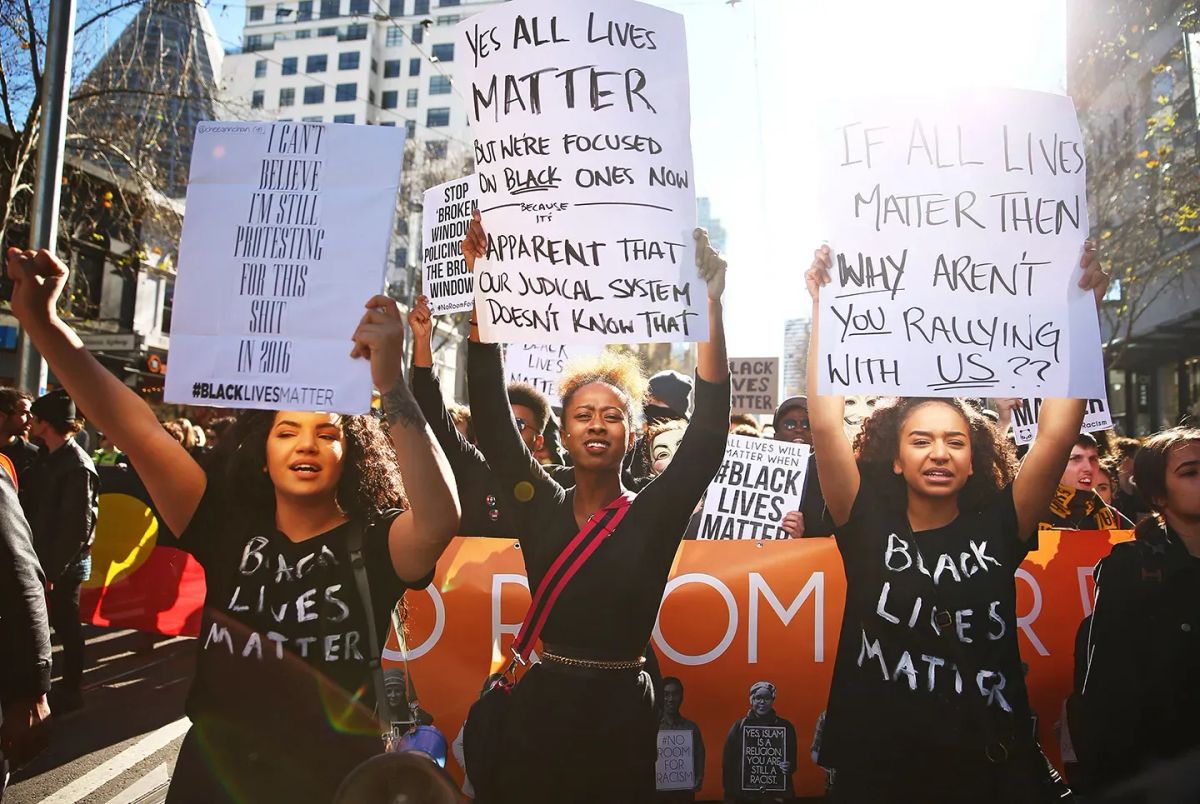
The Blue Lives Matter movement did not emerge spontaneously—it was born as a direct counter to a call for racial justice. In 2013, after the acquittal of George Zimmerman for the killing of seventeen-year-old Trayvon Martin, three Black women—Alicia Garza, Patrisse Cullors, and Opal Tometi—created the hashtag #BlackLivesMatter. What began as a statement of dignity quickly grew into a global demand for accountability. By 2014, after the killing of Michael Brown in Ferguson, Missouri, Black Lives Matter had become a nationwide force insisting that America confront the role of systemic racism in policing. Millions of people took to the streets, raising uncomfortable truths about whose lives are protected and whose are routinely devalued by the state.
But as this movement pushed for reform and visibility, it sparked a wave of backlash. Many police officers, and those who strongly identified with law enforcement, felt personally targeted by the criticism. They believed that Black Lives Matter was not only protesting police brutality, but attacking the very identity and honor of police. Then, in December 2014, the killing of NYPD officers Rafael Ramos and Wenjian Liu in Brooklyn by a man claiming retaliation for police violence intensified that fear. Within days, a countermovement took shape: Blue Lives Matter. It was framed as a statement of protection and unity—an assertion that police lives also carried value and deserved respect.
Yet the rhetoric and symbolism of Blue Lives Matter quickly became political. Instead of acknowledging or engaging with the systemic issues that Black Lives Matter was raising, Blue Lives Matter reframed the conversation around police victimhood, positioning law enforcement as the group under siege. This shift redirected the national narrative away from accountability and toward resentment—casting any criticism of police practices as inherently hostile or dangerous. In 2016, this sentiment entered legislation when Louisiana passed the first “Blue Lives Matter” law, expanding hate-crime protections to include law enforcement officers. Supporters argued that it honored those who risked their lives. Critics pointed out that hate-crime protections were created for traits or identities a person cannot choose—race, religion, sexuality—not a professional role one voluntarily enters.
The Thin Blue Line flag soon became the signature symbol of the movement. What once was a metaphor describing police as a barrier between chaos and order evolved into a politicized emblem. It appeared at pro-police rallies and counter-protests to Black Lives Matter demonstrations. Over time, that flag began to show up at white supremacist gatherings, militia trainings, and, most notably, carried through the halls of the U.S. Capitol on January 6th, 2021. For many Americans, the symbol no longer represented unity—it symbolized resistance to accountability and a refusal to acknowledge racial injustice.
The timeline reveals the pattern clearly:
2013 – Black Lives Matter forms.
2014 – Ferguson brings national focus to systemic policing issues.
December 2014 – Blue Lives Matter emerges as a backlash.
2016 – The first Blue Lives Matter law is passed.
2017–2019 – The Thin Blue Line flag becomes widespread—and politicized.
2020 – After George Floyd’s murder, both movements collide at the center of American life.
Understanding Blue Lives Matter requires recognizing what it responded to. It did not arise from a movement for equality, but from a defensive reaction to challenges against institutional power. It emerged at the very moment the U.S. was being forced to confront the racial biases embedded in its policing system—and many people wanted to look away. The movement allowed them to do so. It offered comfort instead of reflection, loyalty instead of accountability.
Alongside Blue Lives Matter grew another refrain—“All Lives Matter.” At first glance, the phrase sounds compassionate, even universal. But in practice, it served as a rhetorical erasure. When people said “Black Lives Matter,” they were not claiming that Black lives mattered more, but that they had been treated as if they mattered less. “All Lives Matter” functioned as a way to sidestep that reality. It flattened the conversation and avoided the uncomfortable acknowledgment that racism shapes how law enforcement, government, and society value human life. Instead of addressing the disproportionate harm inflicted on Black communities, “All Lives Matter” offered a way to dismiss the urgency of reform without appearing overtly opposed to equality. It was not a call for unity—it was a call to silence specificity. And in a nation where history has repeatedly shown that equality is not felt evenly, refusing to name who is hurting is simply another way of refusing to heal.
In the end, Blue Lives Matter became less about honoring individuals and more about protecting the institution of policing from reform. It reflected a deep divide in America: between those who believe justice requires change and those who fear what change might reveal. It showed how quickly calls for collective conscience can be absorbed, rebranded, and turned into shields for the very systems that sparked protest in the first place.