The Math of Corruption: How Fifty Years of Republican Rule Rewrote the Ethics of Power

For half a century, the story of political corruption in America has followed a familiar pattern. When we trace indictments, convictions, and scandals through the administrations of both major parties, a pattern emerges so lopsided it can’t be dismissed as coincidence. From Nixon’s sabotage and cover-ups, to Reagan’s covert arms deals, to Trump’s avalanche of criminal indictments and felonies, the Republican Party has repeatedly turned the machinery of government into a tool for self-enrichment, political retribution, and corporate capture. The data is clear: the GOP has not only normalized corruption—it has industrialized it.
The Nixon administration produced over 70 criminal indictments and sent top officials to prison for crimes against the Constitution itself. Reagan’s two terms brought the Iran-Contra scandal, the Savings and Loan crisis, and a record number of cabinet-level convictions. Under George W. Bush, war profiteering reached new heights, with billions in taxpayer funds disappearing into the black hole of “contractor logistics” in Iraq and Afghanistan. And under Trump, the scale of criminality was staggering—34 indictments, 10 convictions, and dozens more criminal referrals. No modern president, Democrat or Republican, has ever surrounded himself with so many convicted criminals while simultaneously insisting that loyalty to him outweighed loyalty to the law.
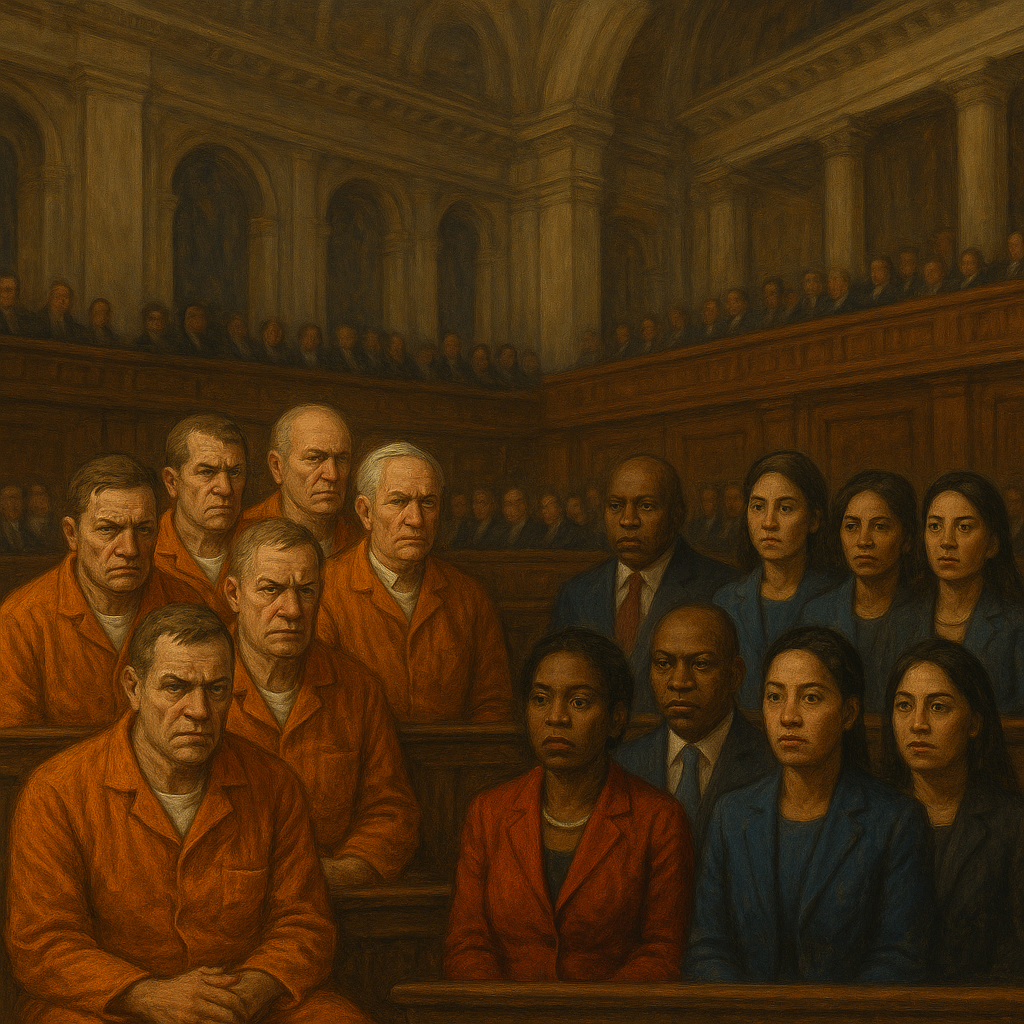
By contrast, Democratic administrations over the same 50-year period—Carter, Clinton, Obama, and Biden—show a radically different pattern. The scandals that did emerge were largely personal or financial, not systemic assaults on democracy. The Clinton impeachment was born from personal misconduct, not a criminal conspiracy. Obama’s eight years, for all their controversy, produced zero cabinet-level indictments. The difference isn’t just luck or bias—it’s how each party views the role of government itself. Democrats, for all their flaws, still tend to see government as an instrument for solving public problems. Republicans have increasingly seen it as something to be gutted, privatized, or plundered.
This philosophical divide—between stewardship and sabotage—explains why the same structures that protect democracy are constantly under attack from the right. Watchdogs and Inspectors General are dismissed as “deep state” operatives. Whistleblowers are smeared or silenced. Oversight committees are weaponized not to expose corruption but to protect it. The very idea of an independent Justice Department is treated as a political inconvenience rather than a constitutional safeguard. Each time a Republican administration erodes these norms, they leave behind a weaker system for the next one to exploit.
Transparency International’s Corruption Perceptions Index now rates the United States at 65—a drop of four points in just a few years. That decline didn’t come from nowhere. It tracks precisely with Republican efforts to delegitimize elections, pack courts, suppress voting, and blur the line between public office and private gain. What was once backroom bribery has become open defiance. Corruption no longer hides; it campaigns.
And the rot runs deeper than just politicians. It’s in the network of lobbyists, media machines, and dark-money super PACs that launder influence. It’s in the billionaires funding climate denial while buying up farmland and water rights. It’s in the corporations writing tax codes and the defense contractors writing foreign policy. The Republican Party has become the political arm of this system—a pipeline between private greed and public power.
There is a reason Republican-led states have higher corruption conviction rates, more ethics violations, and more prosecutions of public officials. It isn’t because they’re targeted unfairly—it’s because when one party holds unchecked power for too long, corruption becomes policy. Whether it’s Florida’s book bans and graft-ridden charter schools, Texas’s no-bid energy deals, or the revolving door of GOP officials moving straight into corporate boards, the pattern is identical: ideology is camouflage for extraction.
The math of corruption isn’t partisan by design—but the evidence is. Republicans have spent fifty years dismantling the safeguards that prevent corruption, and then crying foul when caught in the act. Nixon’s paranoia. Reagan’s plausible deniability. Bush’s profiteering. Trump’s outright criminality. Each built on the last. Each lowered the bar. Each made the next scandal easier to justify.
At this point, “party of law and order” has become a punchline. What they’ve really built is a culture of impunity—one where loyalty is rewarded, truth is punished, and justice is optional. And unless America reasserts the idea that no one, not even a president, is above the law, the next chapter will be worse. Because in the math of corruption, the trend line doesn’t lie—and for the Republican Party, it’s been climbing for fifty years straight.