The New Gulag: The United States’ Hidden Network of Indefinite Detention

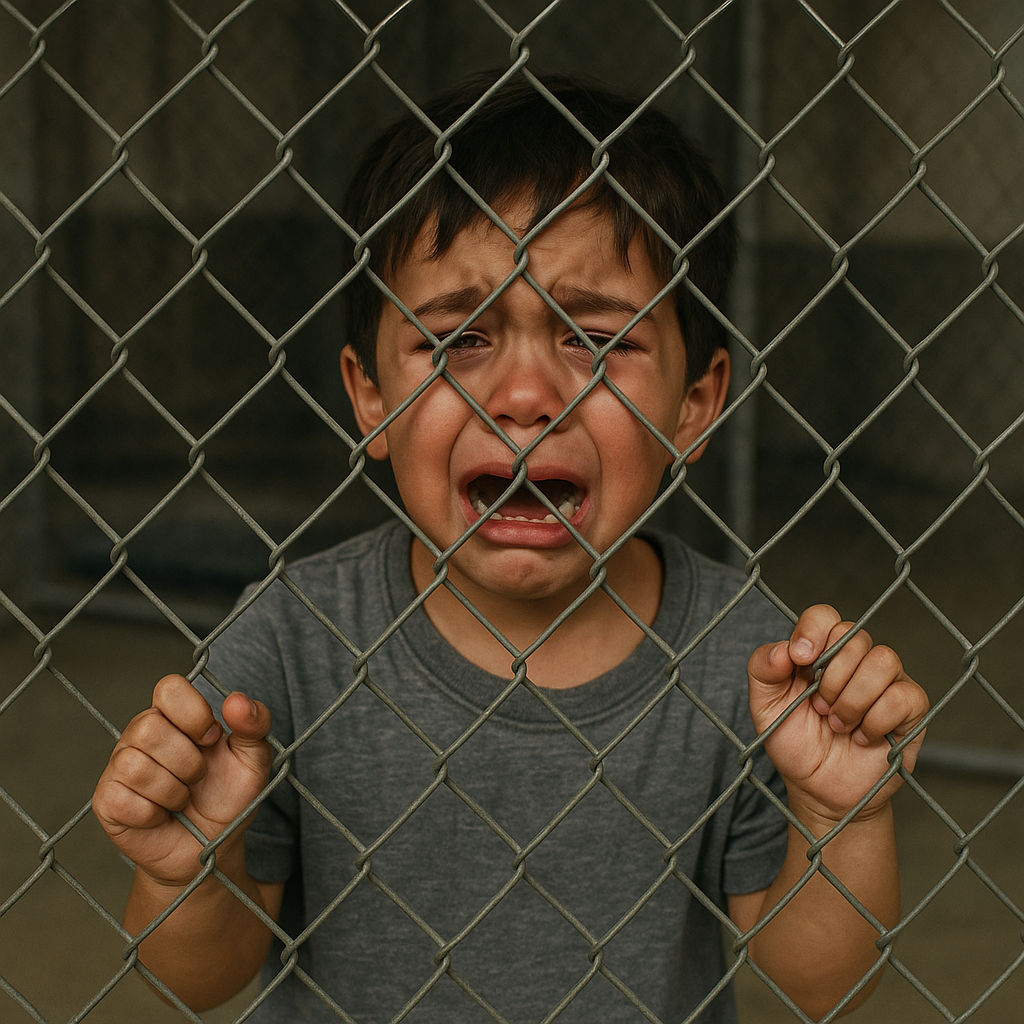
Since the beginning of the Trump presidency, ICE has detained more than 100,000 people, supported by more than $45 billion in federal funding. Beneath the sanitized language of “immigration enforcement” lies a vast network of detention centers—a hidden prison system that now rivals the Bureau of Prisons in scale but operates in the shadows. Behind the fences and tent walls is an apparatus of indefinite detention, solitary confinement, and administrative disappearance that would be unthinkable under normal democratic conditions.
The viral videos of masked agents smashing car windows, dragging parents away in front of their children, or zip-tying migrants in broad daylight are only the entry points. What happens after the phones stop recording is far less visible and far more disturbing. Those taken into ICE custody disappear into a labyrinth of private contractors, legal loopholes, and opaque bureaucratic processes that make it nearly impossible to track or intervene. Families lose contact. Attorneys lose cases before they begin. The state gains the power not only to detain but to erase.
Investigations by Physicians for Human Rights, Human Rights Watch, and the ACLU show the scope of the hidden machinery. More than 10,000 detainees in a single year were placed in solitary confinement—three out of four for longer than 15 days, and many for far longer than a month. The United Nations defines solitary confinement beyond 15 days as psychological torture; ICE uses it as standard practice. Detainees have been isolated for being LGBTQ, mentally ill, or for filing complaints. Some were placed into “special management units” for asking to speak to an attorney.
Across the network, the patterns repeat: overcrowded tent cities, deliberate obstruction of legal representation, chronic medical neglect, and color-coded uniforms that change based on perceived compliance. In facilities from Florida to Louisiana to Texas, detainees who protest mistreatment or request counsel can find themselves reclassified overnight and placed into isolation. In a system where transparency does not exist, coercion becomes policy.
ICE maintains a detainee locator, but it routinely lists people as “Call for details” or removes them from the system entirely. Families have reported loved ones being moved thousands of miles without notice or explanation. Others discover relatives have been deported while their cases were still active in American courts. And others simply vanish—unreachable by lawyers, consulates, or watchdog groups.
Meanwhile, new detention facilities continue to appear quietly. The tent city at East Montana in El Paso—built on the site of a former Japanese internment camp—can hold 5,000 people. The “Alligator Alcatraz” complex in Florida and similar “soft-sided” facilities operate on military bases through layers of subcontractors that blur the line between civilian law enforcement and military detention. ICE claims these are temporary holding sites. Yet many detainees remain there for months or years without a hearing. Court backlogs mean some will not see a judge until 2026 or later. Even when judges grant bond, ICE increasingly appeals, effectively nullifying judicial authority and transforming administrative detention into de facto indefinite imprisonment.
The cruelty extends beyond detention. Deportations are often carried out in secret. People are abandoned in remote rural areas without food or shelter. Venezuelans have been transferred to El Salvador’s CECOT mega-prison—a facility internationally condemned for systemic abuse—despite no legal basis for third-country transfers. The United States has begun outsourcing human custody the way corporations outsource labor.
This architecture of invisibility—secret transfers, legal erasure, and the ability of the state to hide detainees—echoes systems of repression seen in authoritarian regimes. It is what Hannah Arendt called the banality of evil: the normalization of cruelty through procedure, paperwork, and “just doing one’s job.” Every individual action inside the system can be defended as administrative necessity. But the system as a whole is designed to crush human beings while denying accountability.
The implications go beyond the border. A government that can detain people indefinitely, obstruct legal representation, and move them without trace has developed a blueprint for political repression. Today, it targets undocumented migrants. Tomorrow, it could target political dissidents, journalists, activists, or anyone deemed threatening to the state. The distance between immigration enforcement and ideological enforcement is far thinner than the public understands.
What is happening in the ICE detention network is not a failure of policy. It is an expression of intent. It is what happens when fear becomes a governing principle, when cruelty becomes bureaucratically efficient, and when the state learns to disappear human beings without public consequence. And it forces us to confront a question no democracy should ever allow itself to face:
How many people have to vanish before we admit that the system itself has become the crime?