The Repeal That Rewired America: How Reagan’s FCC Created Partisan Media

In the mid-20th century, America lived in an era of broadcast responsibility. The airwaves were treated as a public good, and with that privilege came a duty: broadcasters had to serve the public interest by presenting controversial issues of public importance with balance and honesty. This was the essence of the Fairness Doctrine, a policy established by the Federal Communications Commission (FCC) in 1949. For nearly four decades, it acted as a guardrail against propaganda and one-sided reporting, ensuring that citizens were exposed to a range of viewpoints on major national issues. But when Ronald Reagan entered the White House in 1981, that guardrail came down—and with it began the long transformation of American media into the polarized ecosystem we inhabit today.
The Fairness Doctrine was born in an age when the electromagnetic spectrum was limited. Only a few television and radio stations could operate in a given region, and the federal government required licensees to represent the public, not just themselves. The Supreme Court upheld the policy in Red Lion Broadcasting v. FCC (1969), noting that the public’s right to diverse ideas outweighed any broadcaster’s right to monopolize speech. For decades, this created a culture where news was expected to inform rather than inflame—where CBS, NBC, and ABC sought credibility through impartiality. It wasn’t perfect, but it cultivated a shared national narrative. Americans could disagree, but they were largely disagreeing about the same set of facts.
By the 1980s, that landscape was changing. Cable television and talk radio were expanding, and conservative ideologues within the Reagan administration argued that the Fairness Doctrine had become an unconstitutional restriction on free speech. In 1987, Reagan’s FCC, led by Chairman Mark Fowler, repealed the rule outright. When Congress passed a bill to reinstate it, Reagan vetoed it, declaring that government had no business policing editorial content. What he dismantled was not censorship, but the very principle that public discourse required multiple perspectives. Overnight, the incentive shifted from balance to provocation.
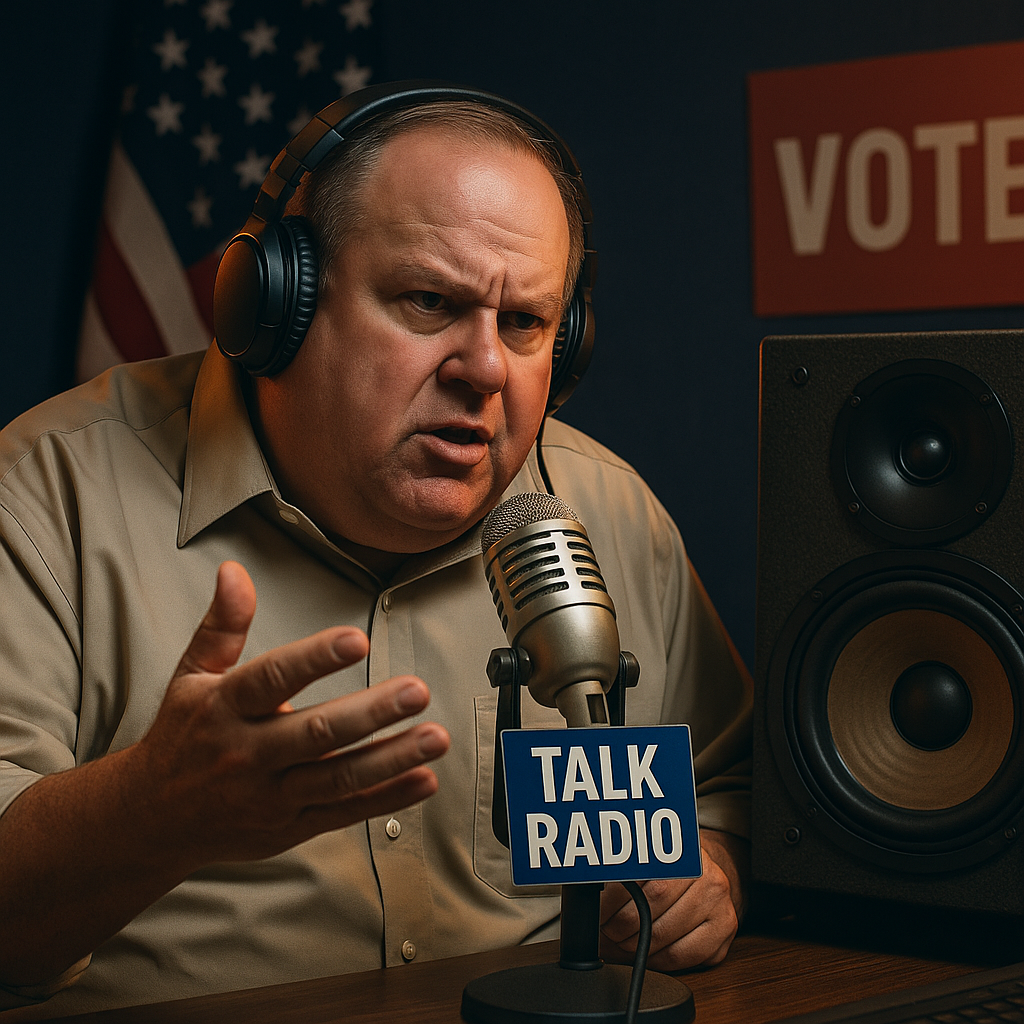
The result was a media gold rush. Within a few years, talk radio exploded—most famously under Rush Limbaugh, who built a loyal audience by providing unfiltered conservative commentary. The doctrine’s repeal meant he could dominate the airwaves without offering any counterpoint. That success created a ready-made audience for ideologically driven cable news. In 1996, Rupert Murdoch and Roger Ailes capitalized on that audience by launching Fox News. Its business model was simple: give conservatives the validation they craved, present opinion as fact, and frame ideological loyalty as patriotism. What began as a regulatory change under Reagan became a cultural revolution that redefined the American information ecosystem.
The repeal of the Fairness Doctrine didn’t just reshape media—it reshaped democracy itself. By removing the expectation of balance, it allowed polarization to metastasize. The public square fractured into echo chambers, each with its own version of reality. Networks learned that outrage was profitable and that fear, more than fact, kept viewers glued to the screen. The result is a society in which political affiliation dictates news consumption, and journalism has become another arm of partisan warfare.
In hindsight, the end of the Fairness Doctrine marks one of the most consequential policy reversals in modern American history. It didn’t merely deregulate media—it deregulated truth. Reagan’s free-market philosophy applied to speech created a market where attention, not accuracy, was the currency. The “Fox News world” is the logical outcome: a nation split by information, where the loudest voice wins and facts are just another opinion.
America once believed that fairness was essential to freedom. In 1987, that belief was discarded in the name of liberty—and what replaced it was noise.