The Road To Complicity: How Ordinary Germans Learned To Live With Hitler

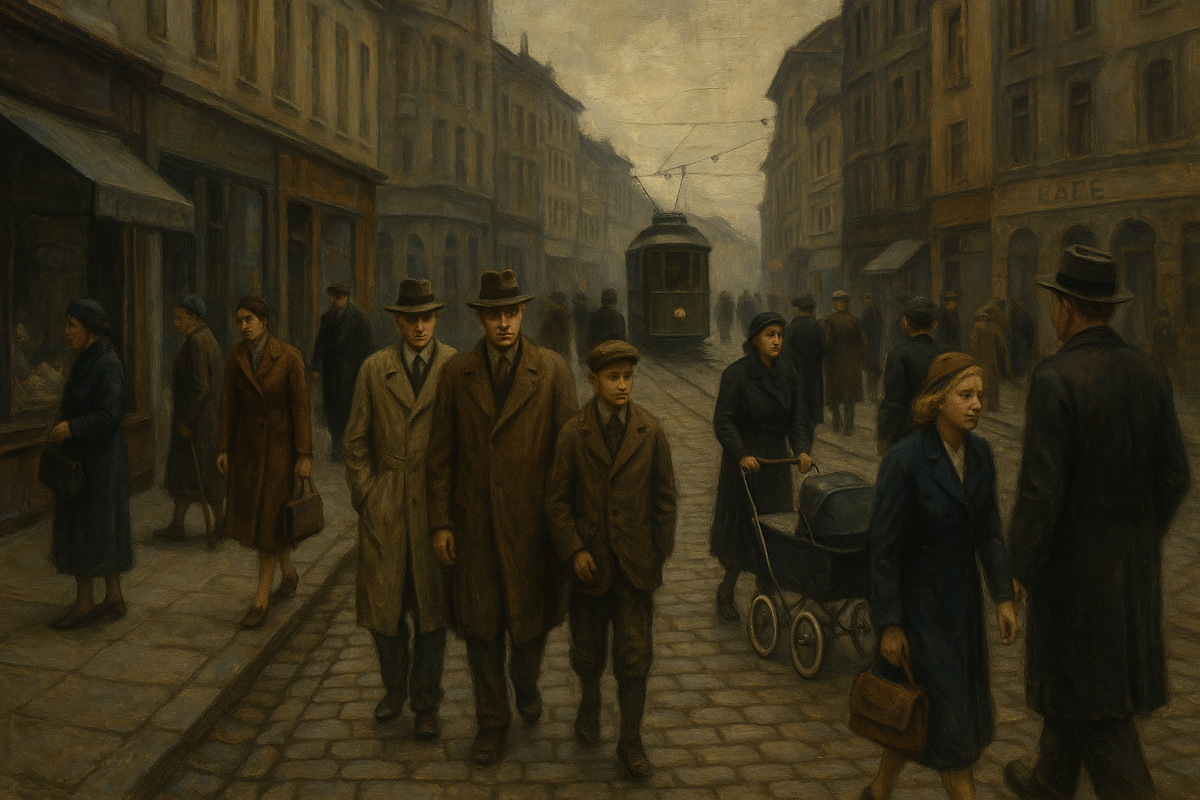
When people look back at Nazi Germany, the mind jumps straight to the end point: death camps, gas chambers, the murder of millions. It feels almost impossible to understand how an entire modern nation could come to tolerate, enable, or even participate in something so catastrophic. The reality is that most Germans did not begin as eager supporters of genocide. They were brought there slowly, through conditions that reshaped their fears and loyalties, through propaganda that redefined moral boundaries, and through a political system that taught them, step by step, to stop seeing their neighbors as human beings. The story is not about a uniquely monstrous people; it is about how ordinary citizens can be drawn into extraordinary wrongdoing when their world collapses and someone offers them certainty, purpose, and enemies.
The collapse after the First World War created the first opening. Germany suffered defeat, economic ruin, political violence, and social instability. The new democratic republic struggled to win confidence as hyperinflation wiped out savings and the Great Depression pushed unemployment into the millions. In this climate, Hitler and the Nazi Party offered a narrative that resonated deeply: Germany had been betrayed, the nation had been stabbed in the back, and only a radical movement could restore dignity and stability. His message was laced with conspiracy and resentment, focusing blame on Jews, leftists, and so-called internal enemies. But the broader appeal was emotional: he promised order after chaos, strength after humiliation, and national pride after years of despair. When the Nazis gained electoral power in the early 1930s, many Germans voted less for antisemitism than for the hope of a strong hand to steady the country.
Once in power, Hitler moved quickly to dismantle democratic institutions. The Reichstag fire, emergency decrees, the banning of opposition parties, and the creation of a single-party state all came within months. Many Germans, exhausted by the instability of the previous decade, accepted these changes as necessary or even welcome. As the regime consolidated authority, it delivered visible improvements: unemployment dropped, rearmament accelerated the economy, and public events created a sense of unity and revival. For people who had known constant anxiety, this new order felt like relief. That feeling softened resistance to what was happening to Jews and other targeted groups.
Propaganda played an essential role in reshaping the moral world of ordinary Germans. Joseph Goebbels oversaw a system that saturated daily life with orchestrated messages. Radio broadcasts, newspapers, films, posters, and school curricula all reinforced the idea of a unified national community threatened by hidden enemies. Antisemitic messages were not always shouted; often they were dripped into the culture gradually, portraying Jews as corrupting agents, economic parasites, or racial pollutants. Over time, these messages redefined how many Germans perceived their Jewish neighbors—not as part of the national fabric, but as outsiders whose presence endangered Germany’s future. Propaganda did not persuade everyone, but it made complicity easier by promising that any harsh measures were defensive, justified, and for the greater good.
The persecution of Jews within Germany advanced step by step. Early boycotts and exclusions from public life gave way to laws removing Jews from civil service, universities, and many professions. Social norms were reshaped so that friendships, business partnerships, and marriages across religious lines became fraught or forbidden. The Nuremberg Laws formalized these divisions by stripping Jews of citizenship and defining Jewish identity in racial terms. Each stage of exclusion was framed as protective rather than punitive. Many Germans disliked violence in the streets or overt brutality, but they accepted the underlying claim that Jews were a problem to be managed, not fellow citizens with equal rights.
Before the regime embarked on the mass murder of European Jews, it tested the limits of public tolerance with its “euthanasia” program targeting disabled and mentally ill Germans. Children and adults deemed “life unworthy of life” were killed in secret, their families deceived with false medical explanations. This program relied on doctors, nurses, bureaucrats, and local authorities—people who convinced themselves that they were carrying out a necessary public health measure. The public eventually sensed what was happening. Rumors spread, death notices looked suspicious, and church leaders began to speak out. Bishop Clemens August von Galen’s sermons condemning the killings triggered visible unease, forcing Hitler to halt the program publicly, though covert killings continued elsewhere. This episode taught the regime key lessons: German opinion still had limits, mass killing had to occur out of sight, and Hitler needed to avoid direct association with the most disturbing actions.
When war began, those lessons shaped the execution of genocide. In the East, SS units followed the German army and carried out mass shootings of Jewish communities. These killings were often public within the occupied territories, but distant enough from Germany that many citizens could ignore the details. Some perpetrators struggled with the psychological burden; alcohol, rote discipline, and ideological conditioning were used to blunt their reactions. As these methods proved both traumatizing and inefficient, the SS developed more systematic means of killing. Camps in occupied Poland were designed for extermination, using techniques refined during the euthanasia program. Gas chambers disguised as shower rooms, carbon monoxide engines, and later Zyklon B turned murder into an industrial process hidden within forests and barbed-wire compounds, far from German towns.
Throughout this period, Germans were drawn into the machinery of genocide not only through belief, but through work. Railway staff scheduled deportation trains; clerks processed property seizures; businesses used forced labor to expand production. Many individuals told themselves that they were only performing mundane tasks, disconnected from the larger horror. But these ordinary acts, multiplied across thousands of workplaces and offices, made the system function smoothly. People who never held a weapon contributed by silence, apathy, or bureaucratic efficiency.
Propaganda provided moral cover by insisting that Jews were responsible for the war, that the nation was under existential threat, and that harsh measures were unfortunate but necessary. Heinrich Himmler’s secret speeches to SS leaders framed genocide as a difficult duty—something that would never be publicly celebrated, but that supposedly preserved the purity and safety of the German people. This framing allowed perpetrators to imagine themselves as guardians rather than criminals. It also allowed ordinary citizens to look away: if the state said these actions were defensive, and if the war demanded sacrifice, then questioning the regime felt disloyal or dangerous.
There were moments of resistance, but they were rare. When German women protested the arrest of their Jewish husbands during the Rosenstrasse demonstration in 1943, the regime backed down, revealing once again that public pressure could matter under the right circumstances. Yet these displays were exceptions in a society increasingly focused on survival as Allied bombs fell, shortages deepened, and the Eastern Front consumed entire generations of young men. Concern for persecuted groups diminished as Germans grew preoccupied with their own suffering. The moral boundaries that might once have driven people to intervene had already been eroded.
In the end, the story of how ordinary Germans came to support—or at least tolerate—Hitler is not a story of sudden radicalization. It is the story of a long descent in which each compromise made the next one easier. Economic despair made promises of renewal irresistible. The craving for order made authoritarianism seem reasonable. Old prejudices made exclusion seem logical. Propaganda hardened hearts. Distance and secrecy obscured reality. Bureaucracy sanitized violence. And fear—of the regime, of social isolation, of being wrong—kept people silent.
This history remains unsettling because it demonstrates how moral collapse can happen gradually, even among people who saw themselves as decent. It shows how a society can be led step by step into accepting what once would have horrified them, and how the capacity for complicity lies not at the edges of human nature, but at its center, waiting for the wrong circumstances to awaken it.