The Strongman’s Shadow: How America Built the Perfect Storm for Donald Trump
Donald Trump’s rise to power was not an accident or an anomaly; it was the culmination of deep, long-term shifts in American society that created the perfect conditions for a populist strongman. His ascent drew from economic dislocation, cultural backlash, institutional decay, and the deliberate use of fear and resentment as political tools. To understand how Trump came to power, we have to look beyond the man himself and examine the world that made him possible.
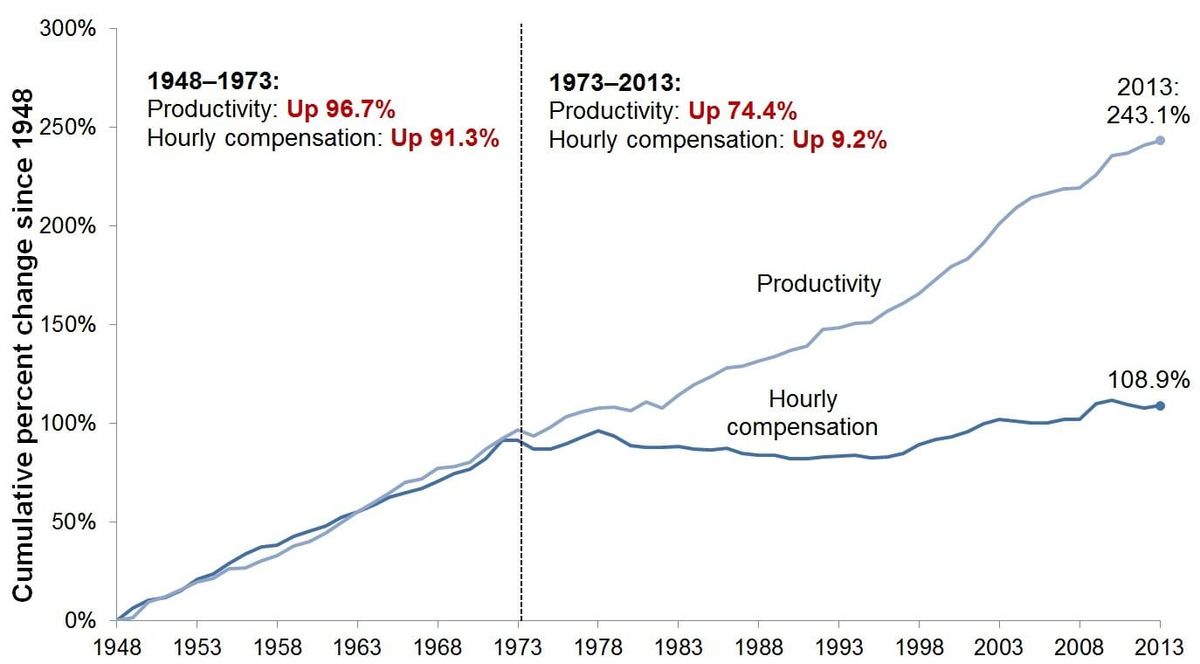
For decades, the American economy was changing in ways that hollowed out communities and upended people’s sense of stability. Factories closed, jobs moved overseas, and automation replaced work that once sustained entire towns. Economic growth continued on paper, but its benefits flowed overwhelmingly to the top. In places like the Rust Belt, wages stagnated while costs rose, and a quiet despair set in. Many working-class Americans, especially white voters without college degrees, felt betrayed by both political parties — one that spoke of globalization as inevitable and another that seemed more interested in Wall Street than Main Street. When people feel economically abandoned, they become receptive to voices promising to tear down the system that failed them. As Thomas Jefferson once warned, “The most dangerous thing to liberty is the accumulation of wealth in the hands of a few.” That concentration of wealth bred the alienation that would one day fuel Trump’s rise.
But Trump’s rise cannot be explained by economics alone. It was also a product of cultural backlash — a reaction to rapid social and demographic change. Over a generation, America had elected its first Black president, legalized same-sex marriage, and seen immigration reshape entire regions. For some, these changes symbolized progress. For others, they felt like displacement. Trump tapped into that anxiety with remarkable precision, painting a picture of a “real America” under siege by immigrants, elites, and urban liberals. His slogan, “Make America Great Again,” was less a policy platform than a nostalgic myth — a promise to restore a vanished past where certain people held unquestioned cultural dominance. That message resonated deeply among voters who felt unseen and disrespected by a cosmopolitan elite that mocked their traditions and values.
The Founders understood the dangers of such cultural division. George Washington, in his Farewell Address, cautioned that “the spirit of revenge... leads always to despotism.” When civic unity fractures into factions fueled by resentment, demagogues thrive. James Madison echoed this in Federalist No. 10, warning that when “a common passion or interest is felt by a majority,” it can “sacrifice to its ruling passion both the public good and the rights of other citizens.” Trump’s rise was the realization of those fears — a politics of grievance elevated above principle, a movement animated more by who it opposed than what it stood for.
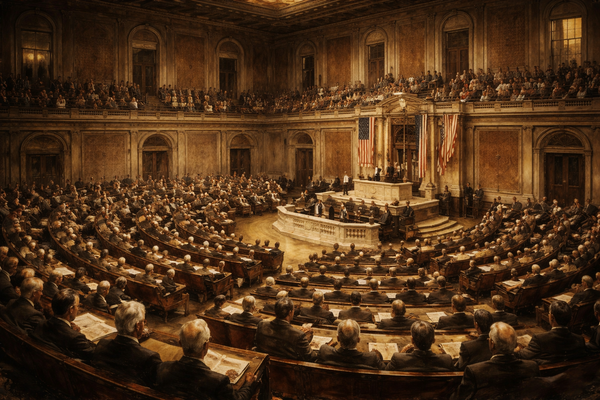
Trump’s success also reflected the erosion of trust in American institutions. By the time he entered politics, confidence in Congress, the media, and even the presidency had collapsed to historic lows. Decades of political gridlock, corruption scandals, and broken promises had left people cynical. The idea that “the system is rigged” no longer sounded radical — it sounded true. Trump’s genius was recognizing that vacuum of trust and exploiting it. He presented himself not as a politician but as an outsider — a billionaire, yes, but one who “told it like it is” and promised to smash the system. In a country weary of polished politicians who spoke carefully but delivered little, his crude, impulsive authenticity became a form of rebellion.
His communication style turned grievance into spectacle. Trump spoke in blunt, emotional language, free of nuance or apology. He bypassed traditional media through Twitter and rallies, where he could feed off crowd energy and dominate every news cycle. He created enemies — the press, the “deep state,” immigrants, women who challenged him — and turned politics into an endless reality show of loyalty and conflict. This wasn’t incidental; it was strategic. Political scientists call it “populist framing” — dividing the world into “the people” and “the corrupt elite.” Every attack against him became proof that he was on the people’s side. In that dynamic, truth mattered less than emotional resonance.
Trump’s rise was also made possible by the weakness of the Republican Party itself. Over the years, party leaders had courted grievance politics — birther conspiracies, anti-immigrant fear, and resentment toward Washington — but believed they could control it. By 2016, the base had moved beyond them. The institutional party, hollowed out by years of anti-government rhetoric, was ripe for takeover. Trump simply said out loud what conservative media had been hinting at for years, and voters rewarded his honesty. The party didn’t capture Trump; Trump captured the party.
Polarization finished the job. In a country where each side saw the other not as opponents but as existential threats, Trump’s message of domination — of “us versus them” — found fertile ground. He promised protection, revenge, and restoration, and his supporters embraced him not despite his breaches of democratic norms but because of them. His contempt for rules, experts, and institutions was precisely the point. It made him appear strong in a time of perceived weakness. John Adams warned that “democracy never lasts long. It soon wastes, exhausts, and murders itself.” The corrosion of democratic faith — the belief that institutions could no longer be trusted — gave Trump his opening.
Ultimately, Trump rose to power because he embodied a promise — not to fix America, but to fight for a version of it that many feared was slipping away. He offered a sense of belonging, validation, and permission to direct anger outward. His movement thrived on emotion: humiliation turned to pride, fear turned to fury, despair turned to defiance. He didn’t invent those feelings; he harnessed them.
Abraham Lincoln once said, “If destruction be our lot, we must ourselves be its author and finisher.” Trump’s rise was a mirror held up to the American system — a reflection of what happens when inequality festers, trust collapses, and people begin to believe that democracy no longer works for them. In that environment, the strongman’s appeal is timeless: he doesn’t need to convince you he’s good, only that the system is worse. And when a nation reaches that point, it’s not the strongman who destroys democracy — it’s the people who invite him in.