The Sun Still Sets in Some Places

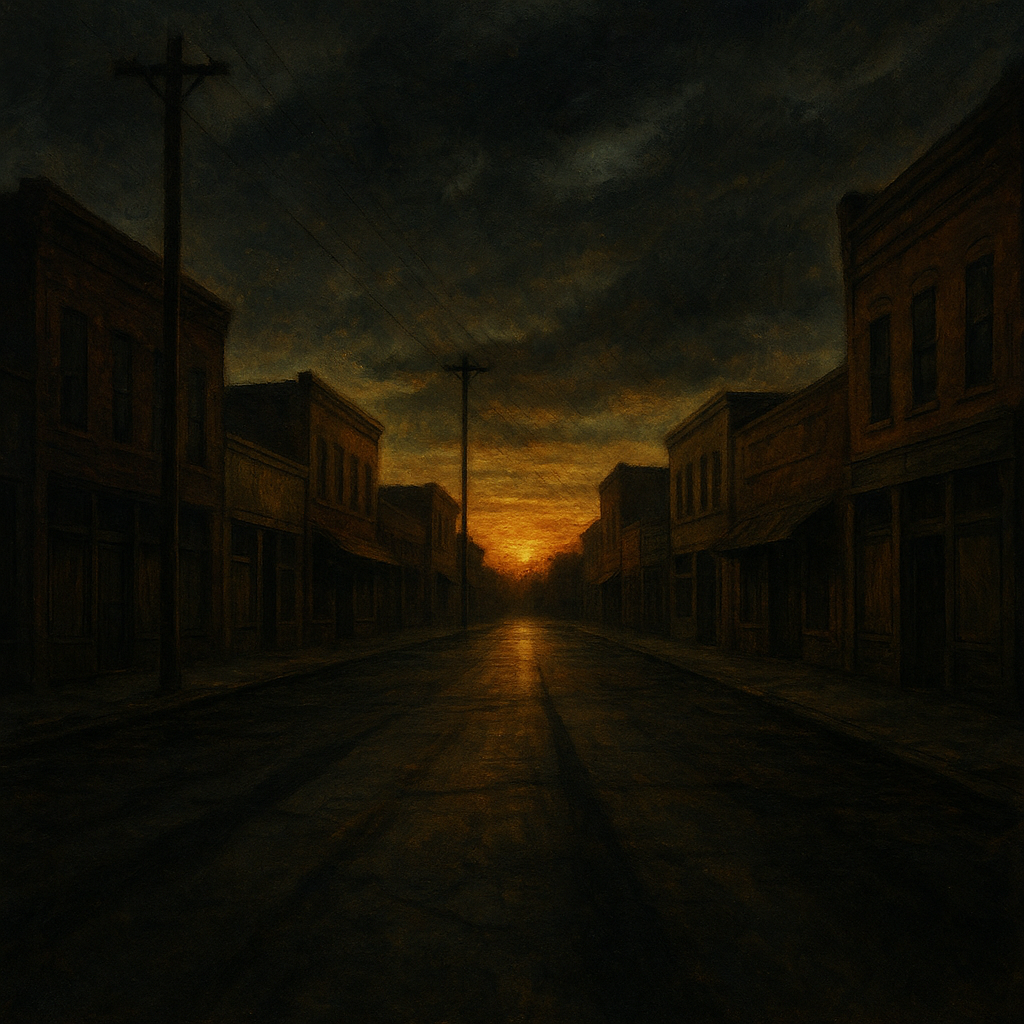
There is a small town in northern Arkansas that calls itself the gateway to the Ozarks. Harrison sits among rolling hills and quiet streets, but its calm is misleading. For generations, the town has carried a different reputation—one that can’t be smoothed over by brochures or welcome signs. Billboards once advertised white-pride radio. The Black population did not simply decline over time; it was violently removed. In 1905 and again in 1909, the town became the stage for racial terror so thorough that every Black resident was forced out.
The first expulsion reads like something out of a nightmare. In 1905, a Black man was jailed for little more than seeking shelter. That night, a white mob stormed the jail, dragged him and another Black prisoner outside the city limits, and beat them. But the violence did not stop there. The mob then moved into Harrison’s Black neighborhood. Homes were set on fire. Black men were tied to trees and whipped. Families woke in the dark to flames climbing the walls and shouts telling them to run. Those who fled into the woods left everything behind—clothes, tools, heirlooms, photographs—whole lives forced into the night with nothing but fear to guide them. By sunrise, Harrison was whiter than it had been the day before.
Four years later, when a Black man was accused of assaulting a white woman, another mob formed. They didn’t wait for trial. They didn’t care about evidence. They saw the moment as an excuse: a second chance to “finish the job.” Every remaining Black family was terrorized into leaving. By the end of 1909, Harrison had succeeded in something America rarely admits out loud—it had made itself white-only by design.
But Harrison is not unique. It is simply more transparent about what thousands of towns across the United States did quietly between 1890 and 1970. These were sundown towns—places where Black Americans were told not to let the sun set with them inside city limits. Some had signs saying so in words too cruel to repeat. Others relied on banks, realtors, and school boards to do the work in handwriting cleaner than a burning cross but serving the same purpose.
The legacy of these expulsions is still visible. Look at a census map. You can see where the sun set and where it didn’t—entire regions overwhelmingly white not by chance, but because violence made them so. We pretend America’s racial geography is the result of “personal choice” or “community character.” But silence is not accident. Of course people live where they feel safe. Of course people don’t return where they were hunted.
Modern racism prefers softer language now. It hides behind “property values,” “good schools,” and “neighborhood integrity.” It doesn’t need a mob when you have zoning boards, HOA covenants, and polite whispers about who might “fit in.” It rewards those who keep quiet. It exhausts those who speak.
This is why Harrison matters. Not because it is the worst place in America, but because it is the clearest mirror. Its story reminds us that the past is not gone—it is operational. It shapes who lives where, who feels welcome, who gets to belong. Racism doesn’t need to scream to hold power. Sometimes it just waits for the sun to go down.
The signs at the city limits may have come down. The billboards may have changed. The smoke no longer rises from burning homes. But the message that once governed who was safe after dark has not vanished. It lingers in glances, in boundaries unspoken, in silence mistaken for peace.
In far too many places, the sun still sets the same way.