The Supreme Court on Quicksand: Fear, Faith, and the Slow Collapse of the Rule of Law

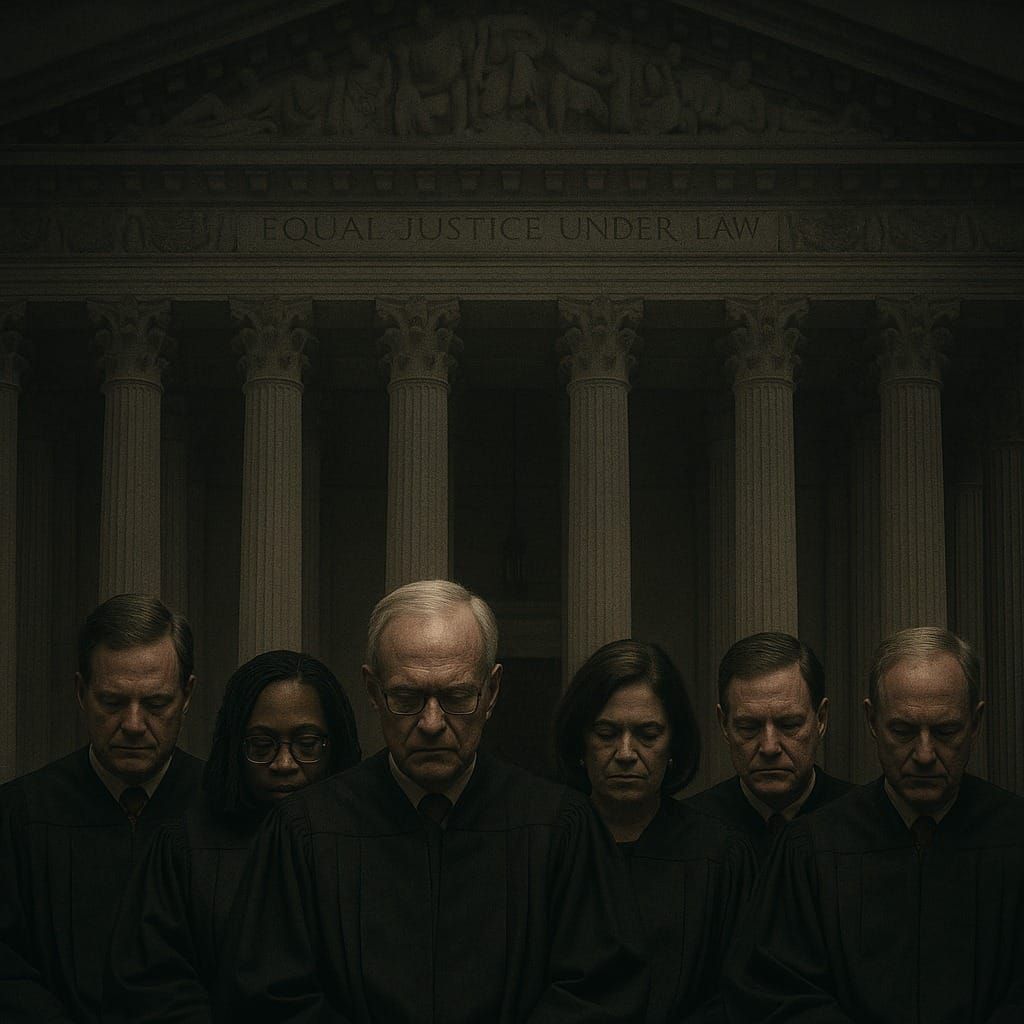
The Supreme Court isn’t protecting Donald Trump because they think he’s right. They’re protecting him because they’re terrified of what happens if they don’t. In 2025, the Court has sided with the Trump administration in roughly 91% of emergency docket cases and nearly 70% of full rulings. That’s not judicial confidence—it’s judicial paralysis. The uncomfortable truth is that the Supreme Court has no enforcement mechanism. It cannot send soldiers, it cannot order arrests, and it cannot compel compliance. Its power exists only as long as the President and the people believe in the rule of law. As Alexander Hamilton wrote in Federalist No. 78, “The Supreme Court has no troops, no sword, and no purse.” That faith—the idea that law binds even the powerful—is what’s breaking.
This administration is systematically pushing the limits of legality to see what breaks first: the law or the Court. Every time Trump defies a ruling, fires an investigator, or claims “absolute immunity,” the system absorbs more damage. Each act of defiance becomes the new normal. Each silence becomes complicity. Each ruling that bends to avoid crisis only invites more defiance next time. He’s not just governing—he’s stress-testing democracy itself.
Justice Amy Coney Barrett, in her most recent interviews, tried to reassure the public that the Court “does not serve any political master” and that its integrity remains intact. Yet even in her careful words, you can hear the strain—the effort to preserve the Court’s image while its decisions increasingly track the administration’s will. Barrett speaks of faith in institutions, but faith without courage is theater. When the Court’s silence becomes a shield for power rather than a check against it, that faith curdles into fear.
The Justices know that if they openly rebuke Trump, he may simply ignore them, triggering a constitutional crisis with no clear resolution. So they choose restraint. They delay, narrow, and sidestep. They call it “judicial prudence,” but restraint in the face of lawlessness isn’t prudence—it’s surrender. They are hostages of their own legitimacy, afraid that enforcing the law might destroy the illusion that law still matters. As Justice Robert Jackson once said, “The Constitution is not a suicide pact.” But neither is it meant to be a hostage note.
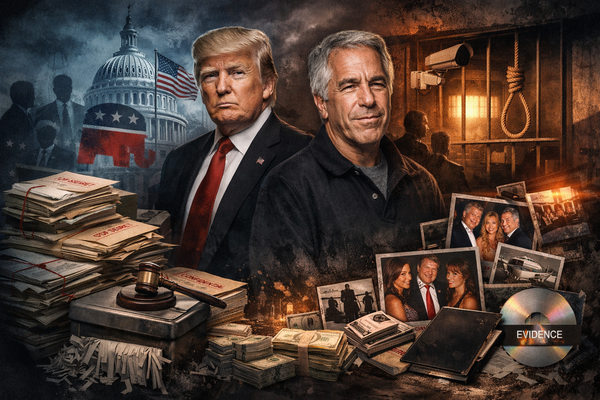
Congress, meanwhile, is paralyzed for its own reasons. Members now live under constant threat—not just of being primaried, but of being killed. Threats of violence have become a regular feature of American politics. Some lawmakers quietly admit they vote based on safety, not conscience. Even Marjorie Taylor Greene, one of Trump’s most loyal allies, recently said, “I’m not suicidal,” after receiving death threats from Trump supporters for calling for the release of the Epstein files. When the most loyal voices in his movement are afraid of his followers, that’s not politics anymore—that’s coercion.
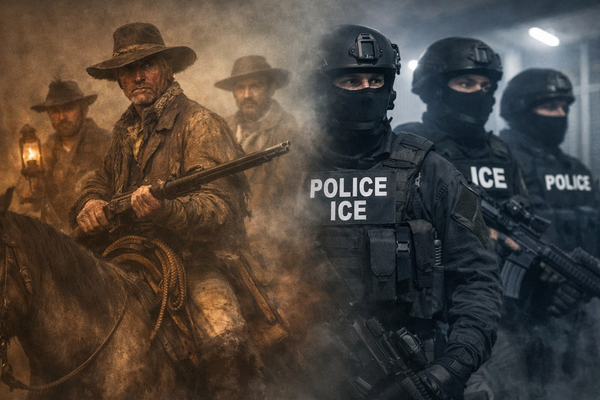
In a healthy democracy, each branch of government checks the others. In ours, they’re holding each other hostage. The Supreme Court won’t stop Trump because they fear he’ll ignore them. Congress won’t stop him because members fear his supporters. Law enforcement won’t stop him because loyalty has been politicized to the core. This isn’t checks and balances—it’s a system of mutual blackmail.
The Constitution only works if people believe in it. That belief—that shared sense of civic duty and accountability—is evaporating. Every time Trump defies a ruling and the Court does nothing, the law loses a little more of its authority. Every time Congress caves to fear, democracy loses a little more of its soul. As Edmund Burke said, “The only thing necessary for the triumph of evil is for good men to do nothing.” We’re watching that unfold in real time.
The Court may look powerful, but in truth it’s standing on quicksand—balancing precedent on fear. Trump knows it. He’s using that fear like a weapon, making each act of defiance seem routine until the law itself bends to his will. The terrifying part isn’t that Trump defies the courts. It’s that he’s teaching America how to live without them.
If the Supreme Court continues to choose self-preservation over courage, the rule of law won’t end with an explosion. It will fade quietly—case by case, ruling by ruling—until the people no longer believe it exists at all. “It is not power that corrupts,” Aung San Suu Kyi once said, “but fear.” And right now, America’s most powerful institutions are being ruled by fear.