The War They Wanted

The escalation with Venezuela isn’t an accident, a misunderstanding, or a sudden awakening to the dangers of narcotrafficking. It’s the convergence of three forces that have been quietly building for months: an administration losing control of its domestic narrative, a manufactured maritime crisis used to justify military action, and a long-standing desire to seize the world’s largest oil reserves under the cover of “restoring order.”
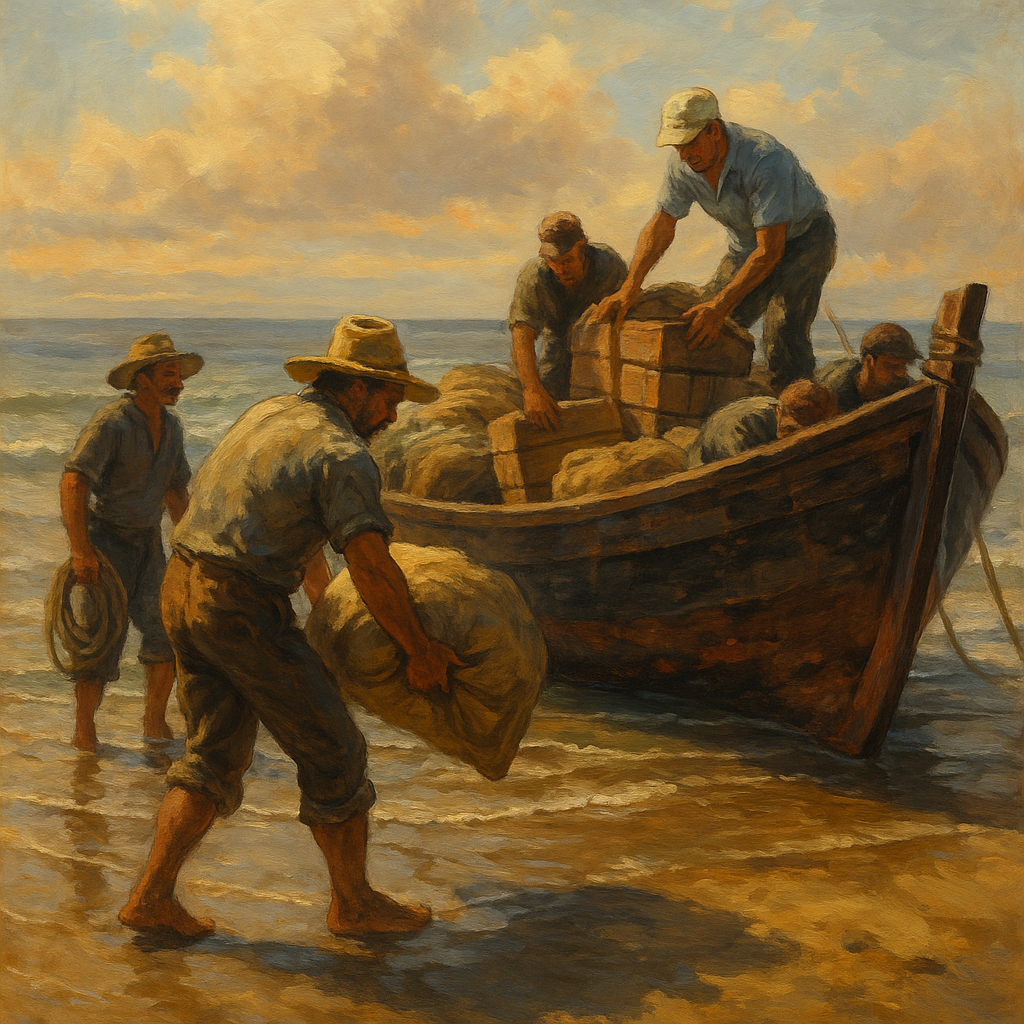
The maritime story is the simplest place to start because it’s the easiest to disguise. Drug interdiction always plays well with the public. It sounds decisive. It lets officials draw a straight moral line between “us” and “them.” But the pattern at sea doesn’t match any known smuggling profile. Real narco-boats operate with minimal personnel and minimal weight. They’re engineered to outrun patrol craft and slip past radar, not to ferry crowds of people across open water. Yet many of the vessels being sunk have exactly that: too many passengers, too much visible equipment, and none of the markers of a trafficking operation. That suggests something closer to fishing collectives or civilian coastal traffic — people trying to survive, not move cocaine. The unmistakeable overmanning of these boats is a physical fact, not a political opinion; the physics alone rule out a smuggling mission.
When you pair that with the unexplained resignation of the admiral overseeing operations in the region, it becomes harder to accept the administration’s story at face value. Senior officers don’t walk out in the middle of an active maritime campaign without reason. That kind of resignation usually signals either a moral objection to orders, a misalignment with the stated mission, or a recognition that the public narrative cannot be squared with the actual operational picture. When that internal story emerges — whether through reporting, testimony, or inevitable leaks — it will likely reveal a military leadership caught between political demands and operational reality. And operational reality isn’t what the White House says it is. The administration needed a doorway to conflict, and “drug boats” provided the most convenient hinge.
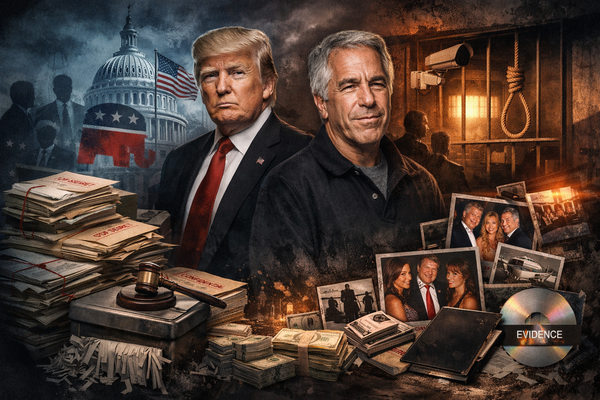
The second force driving this escalation is domestic political collapse. Approval ratings have entered territory no administration wants to see. Even the most loyal factions have been shaken by the renewed scrutiny surrounding the Epstein web of relationships — scrutiny that can’t be shaken off with a rally or a social media outburst. Layer on an economy that’s contracting in visible ways — job losses, rising operating costs, shrinking margins for small independent businesses — and the administration faces a political ceiling closing in from every direction.
History shows what leaders do when cornered. Johnson escalated Vietnam as domestic pressure mounted. Thatcher leveraged the Falklands War to turn a struggling government into a mandate. George W. Bush’s sharp post-9/11 and Iraq War approval surges are well-documented. Even Putin used military incursions to resuscitate approval ratings that were sagging under corruption and economic stagnation. War is a political tool, and in the American context it has repeatedly offered presidents the psychological unifier they couldn’t achieve through policy.
This administration knows that. It has used spectacle for six years. Now, with scandals metastasizing and its own coalition fracturing, a foreign conflict offers a simple, time-tested escape route: change the subject, create a villain, and demand unity under the guise of national security. The bump in support that follows the initiation of military strikes is one of the most predictable political phenomenon in modern democracy. They are chasing that bump.
The third driver is the oldest one — the one that erases all pretense when the dust settles. Venezuela remains the most resource-rich state in the Western Hemisphere, holding more proven crude than Saudi Arabia, Canada, or the U.S. Combined. Any administration that frames Venezuela as a geopolitical threat is also staring at the largest oil jackpot on earth. Trump has said the quiet part out loud for years. “We should have taken the oil” was his line for Iraq. He’s repeated variations of it more than once. To him, natural resources are transactional spoils of power.
Behind the scenes, the deals were already forming. Licenses were revoked to create economic pressure. Backchannels explored how to redirect Venezuelan crude away from China, not in the name of freedom or democracy, but in the name of access. When Maduro reportedly offered American companies oil and gold concessions to avoid conflict — a massive concession that would have thrilled any sanctions-oriented administration — the offer was ignored. Because negotiation wasn’t the objective. A weakened Venezuela is easier to control than a cooperating one.
War, under this framework, becomes a mechanism for acquisition. Not liberation. Not humanitarian relief. Acquisition. Control. Resource capture disguised as righteous intervention. When you combine a fabricated maritime narrative, collapsing domestic legitimacy, and a decades-long fixation on Venezuelan oil, the current trajectory stops looking improvised. It becomes coherent. It becomes strategic. And in the most troubling sense, it becomes predictable.
The public story will remain simple — drugs, danger, decisive action. But beneath that simplicity sits an administration in freefall trying to reroute its own fate. War is the oldest political life raft. And Venezuela, with its vast natural wealth and its vulnerable coastal communities, is the easiest target within reach. What we’re watching isn’t just foreign policy. It’s a government using conflict as a mirror to hide its own reflection.