The Weight We’re Carrying Is Not Weakness — It’s Humanity


There’s a heaviness hanging over the country — a quiet gloom you can’t always name, but you can feel. It shows up in the exhaustion behind people’s eyes, in the restlessness in our days, in the quiet sadness that sits under conversations.
That feeling isn’t weakness.
It’s empathy.
It’s the human response to living in a time when cruelty is being normalized again.
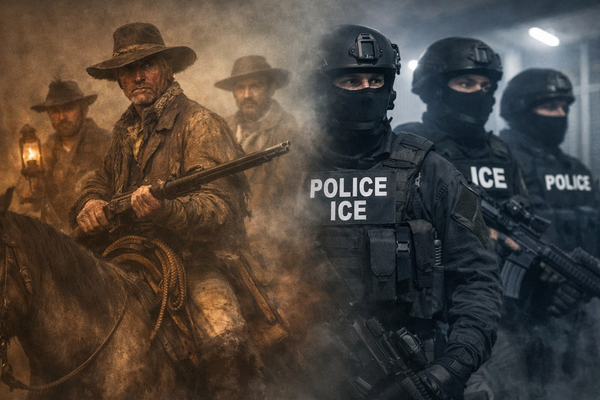
When we see children locked in cages, families torn apart, or innocent people beaten in the streets, we hurt because we are supposed to. That ache isn’t political — it’s moral. It’s the part of us that recognizes that something is deeply wrong.
And yet, we’re told to ignore it. Turn on Fox News and you’ll hear that everything is fine — that America is strong, that “violent cities” are collapsing under liberal chaos. But anyone who actually lives in these cities knows that’s not true. You walk your dog, go to work, buy groceries, talk to your neighbors — life goes on. The apocalypse they describe is theater. It’s fear as programming.
That’s cognitive dissonance — when people choose the lie because the truth feels too heavy to carry.
Psychologists call what we’re seeing group personality alignment. Groups absorb the traits of the leaders they follow. When leadership is grounded, moral, and empathetic, the group reflects that. But when leadership is defined by narcissism, manipulation, and cruelty, the group begins to mirror those traits too.
This is the Dark Triad:
- Narcissism: the belief that one is exceptional and entitled to dominate.
- Machiavellianism: the willingness to deceive and manipulate for power.
- Psychopathy: the absence of empathy and remorse, even pleasure in others’ suffering.
When a political movement is led by someone who embodies these traits, many followers unconsciously adopt them. They learn to laugh at cruelty. They cheer for domination. They mistake hatred for strength and compassion for weakness.
This is how ordinary people lose themselves — not overnight, but through small rationalizations:
“They deserved it.”
“It’s not that bad.”
“They’re breaking the law.”
Until one day, they find themselves unmoved by suffering. Or worse — entertained by it.
I’ve stepped away from people like that — even people I once loved — because my empathy can’t survive in that atmosphere. Staying close to cruelty slowly numbs you to it. And that’s not a price I’m willing to pay. Sometimes, the most moral act is to walk away.
History tells us what comes next. These movements always collapse — not because truth wins all at once, but because lies eventually collapse under the weight of reality. Narcissistic systems destroy themselves from the inside. Their leaders devour the people who once worshipped them. The cruelty that once felt like strength eventually becomes unbearable.
And when it falls apart — in a year, in five, in ten — many of those same people will deny they ever supported it. They will rewrite their own stories. They will say they “didn’t know.” They will insist they were “just trying to make things better.”
But those of us who stayed awake will remember.
And when the darkness passes — because it will — the world on the other side can be made more humane, more just, and more compassionate. Because we will have relearned what history keeps trying to teach us:
Empathy is not weakness.
Empathy is civilization.
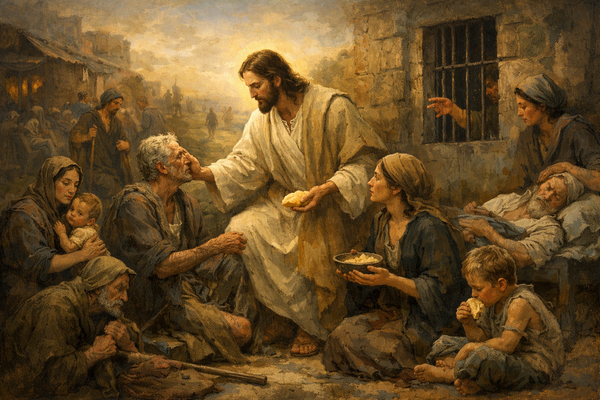
So don’t numb yourself. Don’t surrender your humanity to despair. Feeling the pain of others is not the burden — it is the path out.
Hold onto that.
It’s how we find our way back.