This Is Not Politics Anymore: It’s Identity, Devotion, and Delusion


When a political movement stops being about policies and becomes a source of identity, belonging, and salvation, the possibility of debate disappears. What we are facing with Trump supporters is not a dispute between differing political opinions—it is a psychological condition rooted in identity fusion, authoritarian thinking, and closed belief systems. This does not mean Trump supporters are clinically mentally ill. It means they are participating in a collective psychological framework that operates the same way a cult operates, where reality is no longer external but internally constructed to protect the identity of the group.
Identity fusion is central to this transformation. In this state, the individual’s sense of self becomes merged with the group, such that an attack on Trump is experienced as an attack on the self. This is why criticism cannot be processed rationally. If Trump is wrong, they feel wrong. If he is embarrassed, they feel humiliated. Losing a political argument would feel like losing their own value or place in the world. Debate becomes impossible because disagreement is experienced not as information, but as threat.
This psychological fusion is reinforced by an authoritarian personality structure, which values obedience to a strong leader, aggression toward outsiders, and a rejection of critical thought. This pattern historically emerges in periods of social stress—economic anxiety, cultural disruption, demographic change. Trump’s supporters seek certainty and protection from the complexity of modern life, and they find it in the figure of a dominant, self-assured leader who promises simple answers to difficult problems. Statements like “Only I can fix it” or “They’re not after me, they’re after you—I’m just in the way” are not political messaging; they are emotional binding statements meant to signal that loyalty is not optional, it is existential.
Once the leader becomes the central source of truth, the informational environment collapses into what psychologists call epistemic closure. Sources outside the movement are defined as corrupt, evil, or controlled by the enemy—journalists, academics, scientists, courts, election officials. The result is a sealed world. Facts that contradict the belief system cannot be absorbed. They are rejected before they are even considered. This is why evidence does not matter. Lies do not feel like lies, and truth does not feel like truth. Truth becomes whatever the leader says in the moment. Reality becomes negotiable.
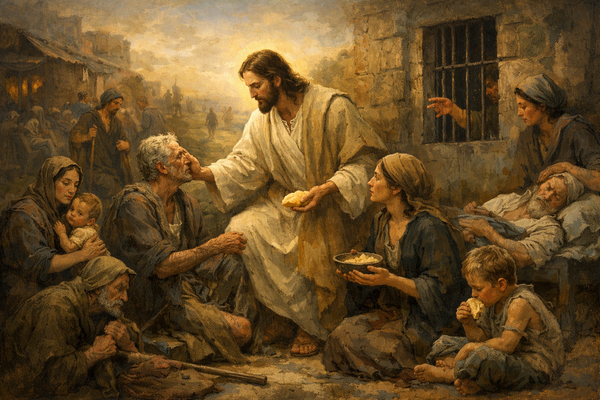
The psychological mechanisms behind this are the same ones that drove historical movements that fused politics with religious certainty. When Crusaders shouted “God wills it,” they were declaring divine justification for any act, no matter how violent. When the Inquisition declared that “to doubt is to betray the faith,” they eliminated the possibility of reflection or correction. Hitler told his followers that Providence guided him, and they believed that supporting him was a sacred duty. Jim Jones told his followers not to believe their eyes, but only his voice. Trump uses the same structure: “What you’re seeing and reading is not what’s happening.” “I was chosen.” “The enemy is trying to destroy us.” “Only I can save you.”
Once a movement believes its leader is chosen—by God, history, destiny, or fate—compromise becomes betrayal. Facts become irrelevant. Opponents become evil. Violence begins to feel justified. At that point, we are not speaking across a political divide. We are speaking across a reality divide.
This is why persuasion fails. This is why data fails. This is why direct confrontation fails. You cannot reason someone out of a belief system that has replaced reason with identity. To accept the truth would require them to dismantle the psychological structure that gives their life coherence and meaning. That is a kind of ego death. Most will not choose it.
So the work before us is not conversion. It is containment. Protecting democratic systems, vulnerable communities, and shared reality itself from a movement that has detached from the real world. History shows that these psychological fever states do break—but not because they are argued down. They break when the myth fails so completely that it can no longer sustain itself. Until then, the goal is to prevent the damage that people are capable of when they believe they are righteous, persecuted, and chosen.
We are not in a debate. We are living alongside a population that has surrendered its perception of reality to a story. And the question now is not how to wake them—but how to prevent the story from burning down everything around it.