When Silence Signals the Collapse of Freedom

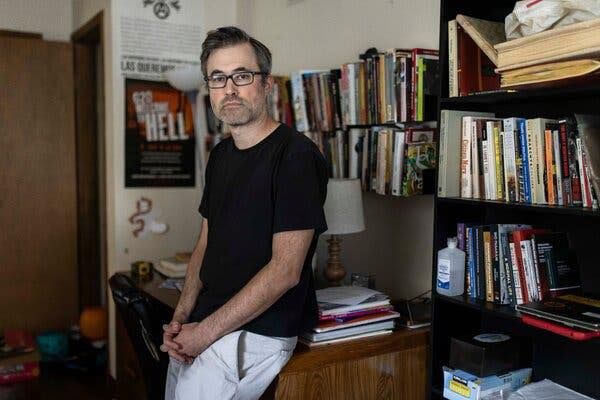
We learn about democracy through its silence. It isn’t always broken in spectacular moments, but in the quiet cancellations, the unannounced removals, the unexplained detentions. A few weeks ago, when Mark Bray—professor at Rutgers University, author of Antifa: The Anti-Fascist Handbook—was prevented from boarding a flight to Spain with his wife and children after arriving at the gate, his ticket abruptly cancelled, no explanation offered, we witnessed such a moment. Suddenly grounded, without warning, his movement blocked—not for committing a crime, but seemingly for the ideas he has studied and taught.
Bray is not a street organizer, he is a historian and academic whose research focuses on anti-fascism—exactly the kind of scholarship that examines the forces which once stood as bulwarks against dictators like Mussolini and Hitler. Yet he has endured harassment and death threats. He says he was leaving the country to protect his family. One moment he was about to travel; the next, he was treated like a threat. Then, hours before this incident, Donald Trump hosted a White House roundtable on “the threat of antifa.” The timing cannot be ignored.
When a government that claims to defend democracy begins to treat a scholar like an enemy, we must pay attention. You may disagree with Bray’s conclusions; you may argue with his views—but to allow an academic’s movement to be quietly curtailed without due process is to sanction a dangerous precedent. Research, writing, teaching—these are the lifeblood of free societies. If they become liabilities, then the society itself is at risk.
This is not an isolated incident. It is a signal of a creeping normalization of authoritarian practices: when belief, expression, scholarship become the grounds for restriction. When the powerful feel they can silence not through reasoned debate, but through regulation, cancellation, invisibility. The same playbook used by regimes throughout history: designate the “enemy within,” vilify them, strip their rights under the guise of security. And it begins with small acts—a cancelled flight, a blocked microphone, a whispered red-flag list.
Fascism does not announce itself with thunderous drums and marching boots (though it can). It starts softly, almost imperceptibly—with restricted travel, with unspoken rules, with reluctance to ask “why.” It starts when citizens stop demanding explanations and begin accepting the pretext of necessity. And if we don’t speak up, we let it happen.
In the past, academics were blacklisted for opposing capitalism in the Red Scare. During the Civil Rights era, Martin Luther King Jr. was branded a communist sympathizer. After 9/11, people were placed on no-fly lists without explanation or appeal. The axis shifts—from “communism,” to “terrorism,” to now “antifa”—but the mechanism of control remains the same: declare a domestic enemy, label dissent, erode rights. The justification changes, the machinery persists.
True patriotism doesn’t cheer for censorship. It doesn’t applaud when scholars are silenced or when citizens lose access to travel or discussion because their ideas make the powerful uncomfortable. It understands that silencing one voice today gives momentum to silencing countless voices tomorrow. A nation that punishes ideas is fundamentally afraid of them—and fear is the first language of tyranny.
If we care about democracy, then we cannot afford to look away from what happened this week. Because freedom doesn’t end with a shot or a barricade—it ends with a shrug. It ends when people say, “Well, maybe he deserved it.” It ends when we stop seeing how tiny acts of repression build into full-scale oppression. When silence becomes the norm.
Fascism isn’t a lightning strike—it’s a slow erosion. And right now, the foundation of our freedom is showing cracks.