When the Law Itself Is Under Fire

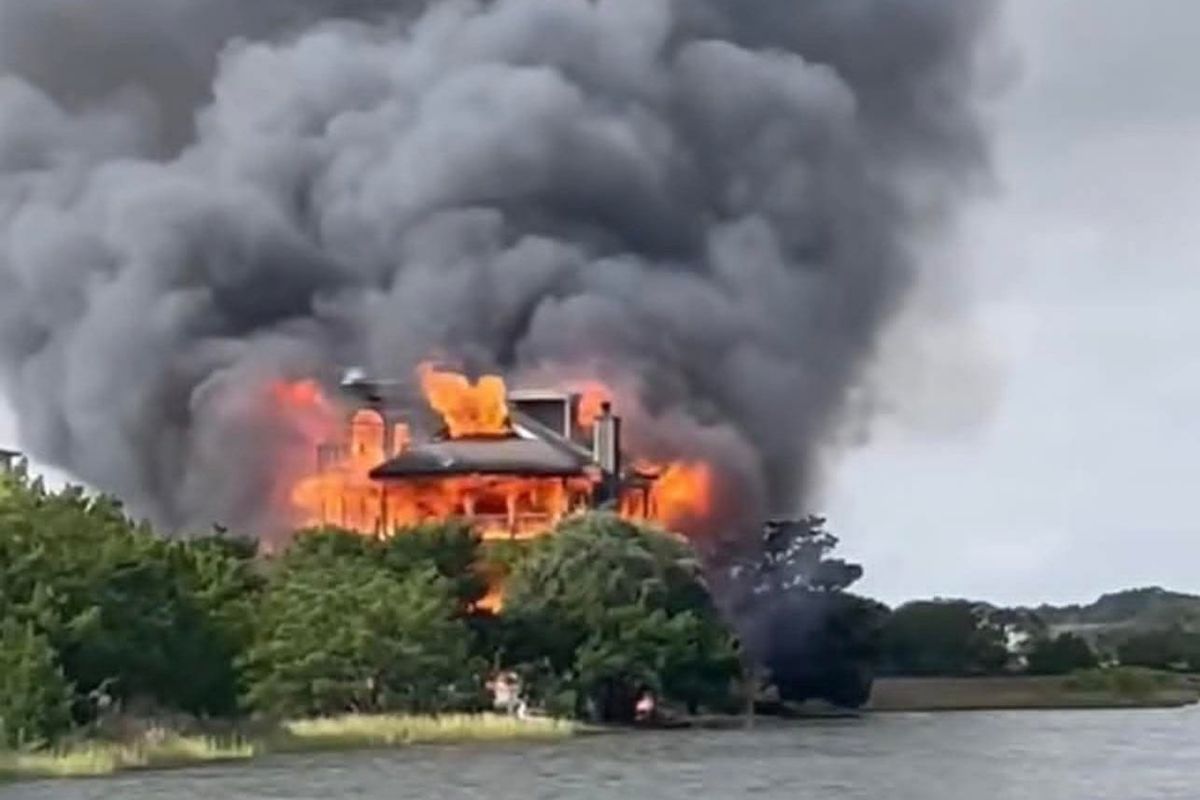
A few weeks ago, the home of South Carolina Circuit Court Judge Diane Goodstein — the same judge who ruled against Donald Trump — was completely destroyed in a fire that witnesses described as an explosion. Her husband barely survived, leaping from the second story to escape the flames. Officials still haven’t confirmed whether it was arson, but the timing — and the atmosphere we’re living in — should chill every American who still believes in the rule of law. Because this didn’t happen in isolation. It happened in a country where judges are being targeted, one by one, in a campaign of fear that began with words.
Threats against the judiciary have surged to unprecedented levels. The U.S. Marshals Service reports that violent threats against federal judges have more than doubled since 2021. Online threats are up over 300 percent in just the past year. Hundreds of federal and state judges now receive police protection or have had their personal information leaked online by extremist groups. More than half say the constant harassment has affected their mental health and their ability to do their jobs. These are the people charged with upholding our laws — the ones standing between order and chaos — and they are being hunted, harassed, and terrorized for the simple act of applying justice.
Donald Trump’s war on the judiciary didn’t start recently — it’s been a slow, methodical erosion of trust in the courts. In 2016, he attacked U.S. District Judge Gonzalo Curiel, claiming he couldn’t be fair because he was “Mexican,” despite being born in Indiana. In 2020, after the sentencing recommendation for Roger Stone, Trump launched a series of tirades against Judge Amy Berman Jackson, accusing her of “bias” and calling her “horrible and unfair.” In 2023, he attacked Judge Arthur Engoron, who presided over his civil fraud trial, calling him “deranged” and “Trump-hating.” When Engoron’s law clerk became a target of Trump’s social media posts, she received a flood of death threats — so severe that the court imposed a limited gag order.
In 2024, Trump turned his rage toward Judge Tanya Chutkan, who oversees his federal election interference case, calling her a “biased Obama judge” and saying she “should be thrown off the bench.” He went after Judge Juan Merchan, who presided over his criminal hush money case, attacking Merchan’s daughter by name and posting false information about her online — a grotesque tactic meant to intimidate. Each attack triggered a wave of online harassment, doxxing, and violent rhetoric from his followers.
And now, Judge Diane Goodstein’s home lies in ashes after an apparent explosion. No one can yet say who caused the fire — but no one can ignore the climate that made it possible. When powerful figures vilify judges, mock their families, and paint them as enemies of the state, it doesn’t just invite violence. It normalizes it.
This is how democratic decay begins — not with a single coup, but with a thousand small permissions. First, judges are demonized. Then, institutions are delegitimized. And eventually, citizens start to see violence not as rebellion, but as righteousness. History shows us this pattern again and again: in fascist Italy, in Nazi Germany, in authoritarian regimes across the world. It always begins with leaders who teach their followers to hate the referees.
When judges must fear for their lives, the law itself is under siege. And when political violence becomes an acceptable form of expression, it’s not just their homes that burn — it’s the foundations of the republic.