When the Press Walks Out, Democracy Walks Out With It

Authoritarianism does not begin with tanks in the streets or soldiers at the gates. It begins with silence. It begins when those in power decide that the truth is no longer a public good, but a threat to their authority. It begins when the press is pushed out of the room.
Both Mussolini and Hitler understood this with chilling clarity. Before either regime fully consolidated power—before the prisons filled, before the wars began, before the killings scaled—they went after the journalists. Not because reporters were the strongest opposition, but because they were the only ones who could explain to the public what was happening. If you eliminate the witnesses, you eliminate the truth. And without truth, power answers to no one.
In Italy, Mussolini wasted no time. By 1925, every newspaper required a government license. Editors were replaced by loyal Fascists. Those who refused were beaten, jailed, or exiled. Opposition papers like Avanti! were destroyed. The press that remained became a theater set—a glossy, staged performance of national pride and unity masking a reality of violence and repression. Mussolini didn’t just dominate the government; he dominated reality.
Hitler followed the same blueprint, but perfected it. With Goebbels at the helm of the Ministry of Propaganda, the German press became an echo chamber of the Führer’s voice. Newspapers didn’t just avoid reporting atrocity—they helped rename it. Genocide became “resettlement.” Invasion became “defense.” Murder became “duty.” Language was bent until morality broke.
And at the heart of that campaign was a phrase repeated over and over again: Lügenpresse—“the lying press.” The goal was not to argue with the press, not to correct it, but to make the public stop trusting it altogether. Once the public stopped believing journalists, the truth no longer had a messenger. The regime became the only reliable narrator of reality.
We have heard this strategy before—under a new name.
“Fake news.”
“Enemy of the people.”
These were not slogans of critique; they were strategies of demolition. They taught millions of Americans to distrust any source of truth not approved by a single political figure. Once truth becomes “partisan,” power becomes absolute.
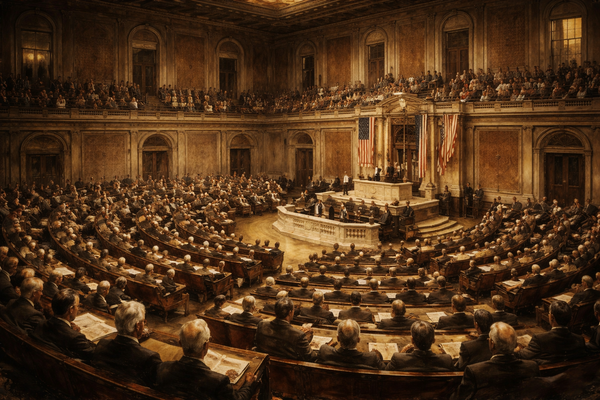
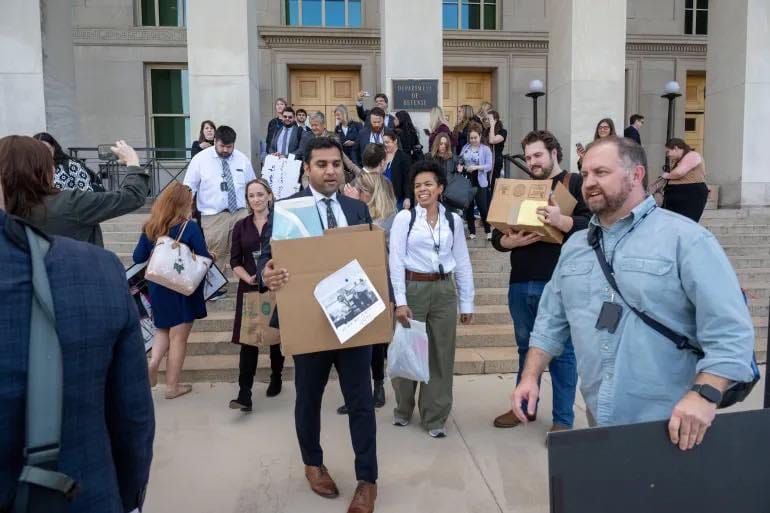
Which brings us to the Pentagon, October 15, 2025.
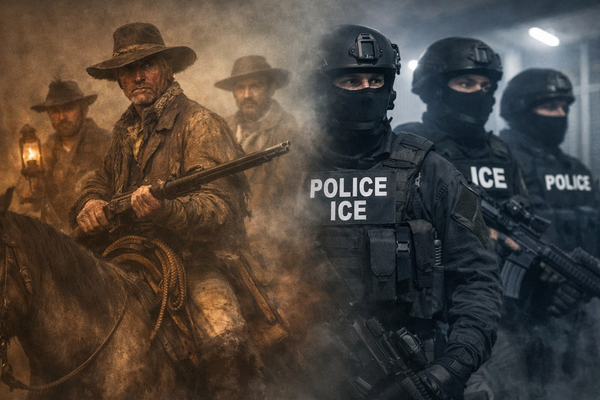
For decades, journalists inside the Pentagon press room asked the hardest, most uncomfortable questions about war, spending, secrecy, and mistakes. This was the room where power answered to the public. And now it is nearly empty. Major outlets walked out rather than accept new rules banning them from seeking “unauthorized” information—even when that information is public and unclassified. The government did not arrest the reporters. It did something far more effective.
It made their work impossible.
Only a handful of friendly networks stayed behind—networks that already echo administration messaging. The watchdog is gone. The mirrors are gone. Only the megaphone remains.
And the excuse? The oldest authoritarian script in the book: national security.
Mussolini used it. Hitler used it. Every government that needed darkness to operate has used it. The justification is always protection. The result is always control.
What makes this moment so dangerous is that it is happening in peacetime. There is no emergency. No crisis. No justification beyond the insecurities of those in power. This is not about protecting the country from enemies—it is about protecting power from accountability.
History is not abstract here. The sequence is always the same:
- Discredit the press.
- Restrict the press.
- Replace the press.
- Rewrite reality.
We are now between steps two and three.
The truth is this: democracy does not evaporate suddenly. It is drained slowly. It disappears in procedural language, in classified briefings, in quiet corridors where journalists once stood and now do not. It collapses not to the sound of marching boots, but to the sound of silence.
When the press leaves the room, the public is no longer invited to know what is done in its name.
And history has already shown us what happens next.
We should not be asking whether this is dangerous.
We should be asking:
How much time do we have left before the silence becomes complete?